Hot Men’s Swimwear Trends 2026: Confidence You Can See
Swimwear used to be a quick seasonal buy, but in 2026 it feels more like a style decision that shapes comfort, confidence, and how smoothly an outfit travels beyond the shoreline. Fresh cuts, lighter technical fabrics, and sharper color direction are giving men far better options than the old split between oversized board shorts and ultra-minimal briefs. If you want a suit that flatters, dries quickly, and still looks polished at a beach café or hotel pool, this year’s trends deserve a closer look.
Article Outline
- How silhouettes are changing, including inseam lengths, tailoring, and the return of body-conscious cuts.
- Which fabrics and technical features matter most for comfort, durability, and performance.
- The colors, prints, and design details shaping the visual mood of men’s swimwear in 2026.
- How to match trends to body type, personal taste, and beach-to-street styling needs.
- What smart shoppers should prioritize, from quality and versatility to care and long-term value.
The Cuts Defining 2026: Shorter, Sharper, and More Intentional
If one trend captures men’s swimwear in 2026, it is the move toward more deliberate silhouettes. For years, the market swung between long, surf-inspired board shorts and basic mid-length trunks that tried not to offend anyone. This season, designers and retailers are showing a clearer point of view. Swimwear is more tailored, more leg-focused, and far more specific about the message it sends. The dominant shape is the mid-thigh trunk, usually with an inseam between 4 and 6 inches. That range works because it is short enough to look current, yet practical enough for swimming, walking, and lounging without feeling costume-like.
Compared with the oversized shorts that once hung close to the knee, today’s trunks look cleaner and more flattering on most builds. A shorter inseam visually lengthens the leg, which helps shorter men in particular, while the trimmer leg opening reduces the ballooning effect that heavier fabrics used to create when wet. Even men who normally avoid shorter cuts are finding that modern tailoring changes the experience. The difference is subtle but important: 2026 swim trunks are not merely smaller, they are better proportioned.
Another notable shift is the rise of alternatives to the standard trunk. Square-cut suits are gaining ground among men who want a sleeker athletic look without going fully into briefs. Swim briefs themselves are also returning in selected markets, especially in resort settings, lap-pool environments, and destinations where European styling has long been normal. That does not mean briefs will replace trunks for the average buyer, but their renewed visibility is broadening what is considered stylish and acceptable. Fashion is loosening its old rules, and that is often when style gets more interesting.
- 4-inch inseams feel modern, sporty, and bold.
- 5-inch inseams offer the broadest balance of trend and versatility.
- 6 to 7 inches still work well for men who prefer a little more coverage.
- Square-cut options suit athletic frames and cleaner minimalist wardrobes.
Hybrid swim shorts are also part of the 2026 conversation. These styles borrow structure from casual shorts, often with flatter waistbands, cleaner pockets, and dressier finishes. They are not ideal for every swim-heavy day, but they do answer a real lifestyle need: one pair that can go from hotel pool to late lunch without looking misplaced. In that sense, the hottest silhouette trend is not just about exposure or bravado. It is about precision. Men want swimwear that looks intentional, feels current, and fits like it was chosen rather than grabbed from the back of a drawer.
Performance Fabrics Take Center Stage: Comfort Is Now a Style Feature
In 2026, fabric is no longer the invisible part of swimwear. Men are paying more attention to how a suit performs because the difference between average fabric and excellent fabric is immediately noticeable. A good swimsuit should dry quickly, stretch comfortably, keep its shape, resist fading, and avoid becoming heavy after a swim. Those needs are pushing technical materials into the mainstream, and the result is better swimwear across nearly every price level.
The foundation of most modern swimwear is still synthetic fiber, especially polyester and polyamide, often blended with elastane for stretch. That blend matters. A trunk with a modest amount of elastane can move much more naturally when sitting, swimming, or walking. Many quality suits now use around 8 to 15 percent elastane, enough to improve comfort without making the fabric feel flimsy. Recycled polyester is also common, particularly in brands that emphasize lower-impact production. While recycled content alone does not guarantee quality, it has become a meaningful baseline rather than a niche selling point.
Lining is one of the most important details buyers overlook. Traditional mesh linings are still common, but 2026 is seeing a stronger move toward compression-style interior shorts or softer support panels. These options reduce chafing, feel more secure, and generally create a more premium wearing experience. For active beach days, that upgrade can matter as much as the outer fabric. Anyone who has dealt with rough mesh on a hot afternoon knows that the wrong lining can ruin an otherwise good purchase.
Sun protection and durability features are also more relevant now. UPF-rated swimwear is widely available, and UPF 50 fabric can block roughly 98 percent of ultraviolet radiation under test conditions. Chlorine resistance is especially useful for men who spend more time in pools than in open water, since chlorine can break down elasticity faster than saltwater alone. Water-repellent finishes, laser-cut drainage, bonded seams, and anti-odor treatments are becoming more common in premium products, though not every feature is necessary for every buyer.
- Choose quick-dry fabric if you plan to wear swimwear between activities.
- Look for soft or compression linings if comfort matters more than tradition.
- Prioritize chlorine resistance for frequent pool use.
- Consider UPF-rated fabric for long beach days, boating, or resort travel.
Perhaps the biggest change is philosophical. Performance used to belong to athletic swimwear, while style belonged to fashion swimwear. In 2026, the best products combine both. The ideal pair feels almost invisible in motion, dries before the next stop, and still looks crisp enough for a linen shirt and sunglasses. That fusion is why fabric has become a trend story in its own right. When materials improve, confidence follows quietly, and often that is the most convincing luxury of all.
Color, Print, and Surface Design: The Visual Mood of 2026
The color story in men’s swimwear for 2026 is richer and more layered than the bright-neon cycles that once dominated summer racks. Instead of relying on loudness alone, brands are using color to create mood. Deep marine blues, sun-baked terracotta, olive, espresso, rust, muted coral, and creamy sand tones are all appearing more often. These shades feel grown-up without becoming dull. They also coordinate more easily with shirts, sandals, and resort layers, which matters in a season where swimwear is expected to do more than survive the pool.
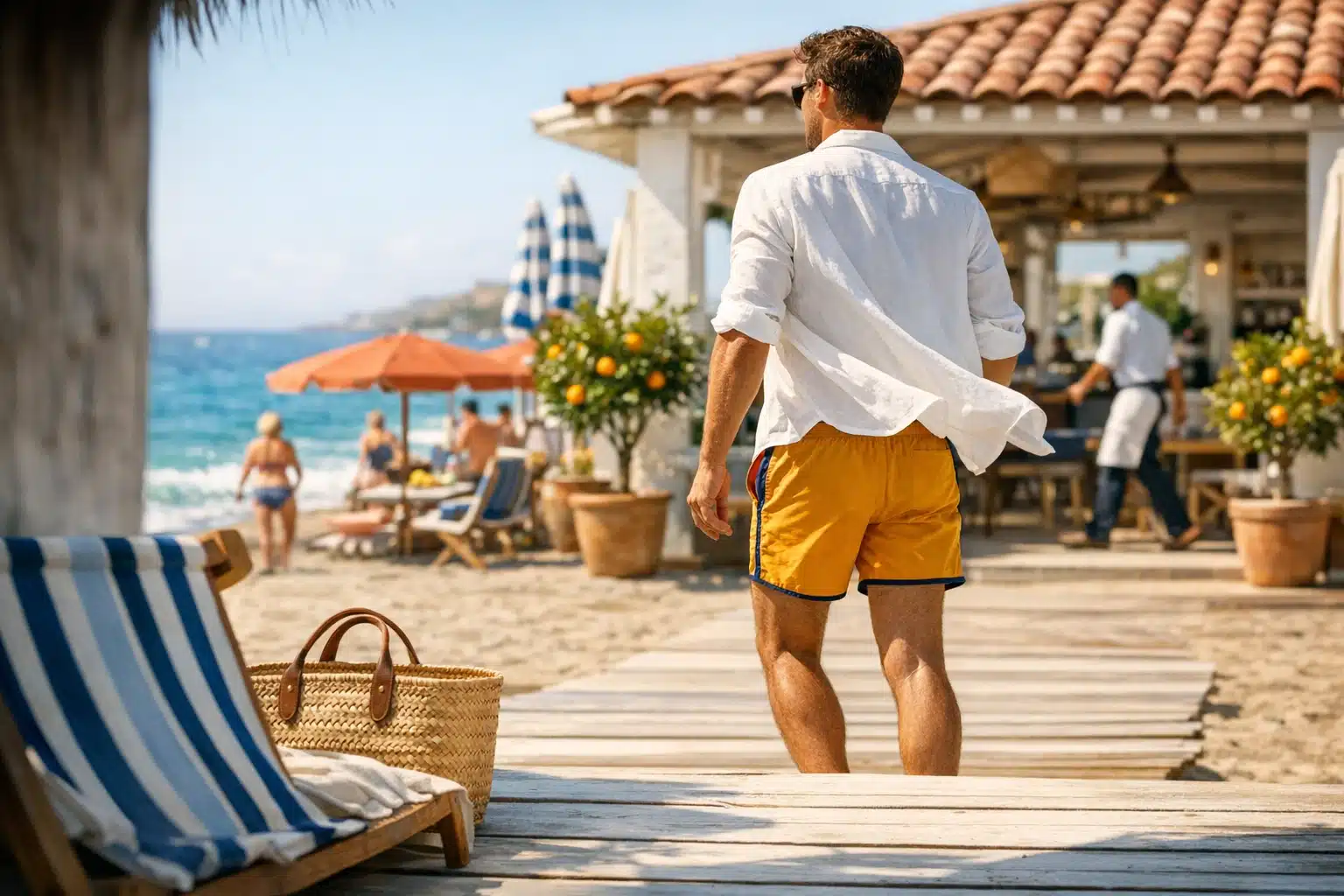
That said, bold color is not disappearing. It is simply becoming more refined. Rather than flat fluorescent blocks, 2026 leans toward washed tropical tones, vintage athletic contrasts, and color combinations that feel slightly faded by sun and salt, even when the garment is brand new. Think saffron with navy piping, dusty pink with chocolate brown, or emerald paired with off-white drawcords. These combinations look more editorial and less novelty-driven. They stand out, but they do not shout.
Prints are moving in two directions at once. On one side, there is a strong appetite for retro geometry: stripes, checkerboard references, tiled patterns, and abstract motifs that nod to the 1970s and 1980s without becoming costume pieces. On the other side, there is growing demand for cleaner micro-prints and textured solids. Men who once avoided pattern entirely are increasingly open to subtle visual interest, especially when it comes through jacquard weaves, tonal embossing, crinkle finishes, or seersucker-like texture rather than large tropical graphics. That shift matters because it gives quieter dressers a way to participate in the trend cycle without abandoning personal taste.
Design details are doing more work too. Contrast waistbands, vintage-inspired side stripes, metal-tipped drawstrings, curved hems, and color-block panels all help a simple trunk feel more intentional. The best examples use restraint. A single stripe down the side can make a plain suit look athletic and tailored. A textured weave can make navy look newly sophisticated. Sometimes the hottest trend is not a louder print but a smarter surface.
- Solid dark tones are ideal for versatility and visual slimming.
- Retro stripes add personality without overwhelming the outfit.
- Micro-prints suit men who want interest with low styling risk.
- Textured fabrics elevate simple colors and photograph especially well.
For men building a small but effective warm-weather wardrobe, this is good news. The 2026 palette is easier to wear, easier to mix, and easier to revisit next season. A well-chosen swim short in olive, deep blue, or clay can feel as dependable as a favorite watch, while a patterned pair can act like the lively friend who always knows where the good beach bar is. There is room for both, and that range is part of what makes this year’s trend landscape so appealing.
Fit, Body Type, and Beach-to-Bar Styling: Making Trends Work in Real Life
Knowing the trends is useful, but knowing which trend suits you is what turns information into style. The best men’s swimwear in 2026 is less about following a universal rule and more about matching cut, rise, and detail to your body and your routine. A man who spends weekends at a lap pool will not have the same needs as someone packing for a coastal holiday. Likewise, a very lean frame, a muscular build, and a fuller midsection all interact differently with the same garment. Smart styling starts with honesty, not insecurity.
For shorter men, trunks with a 4- or 5-inch inseam often create the strongest visual balance because they show more leg and keep proportions clean. A trim leg opening and a slightly higher hem can make a noticeable difference. Taller men usually have more freedom, but extremely long shorts can make them look under-styled rather than relaxed. Mid-thigh lengths keep the line modern. Men with athletic thighs should pay special attention to leg opening and stretch content. A narrow opening may look sharp on a hanger yet feel restrictive when seated. Fuller men often benefit from structured waistbands, darker colors, and prints scaled to the body rather than tiny patterns that visually buzz.
Waist rise matters more than many shoppers realize. A slightly higher rise can feel more secure and flattering, especially when it prevents the waistband from cutting awkwardly across the stomach. Side adjusters, flatter fronts, and less bulky drawcord systems are increasingly useful details because they create a cleaner fit under shirts and knit tops. That matters if you want to wear your swim shorts as part of an outfit rather than as an isolated beach item.
And that is another major 2026 shift: men are styling swimwear well beyond the water. A tailored swim trunk can now sit comfortably with a breezy camp-collar shirt, a lightweight knit polo, an open linen overshirt, or a simple ribbed tank. Leather sandals, minimalist slides, espadrilles, and even refined canvas sneakers can complete the look depending on the setting. The aim is not to pretend you are dressed for a formal dinner. The aim is to look composed while staying true to the relaxed energy of summer.
- If you want a leg-lengthening effect, choose shorter trunks with clean hems.
- If comfort is your main priority, focus on stretch, lining, and waistband construction.
- If versatility matters most, buy a solid or subtle pattern that can pair with shirts easily.
- If you enjoy statement style, let one bold element lead and keep the rest restrained.
Confidence often comes from editing, not adding. The right swimwear does not need to perform like a costume. It should feel like a natural extension of how you already dress, only lighter, brighter, and more relaxed. When the fit is right, the trend stops looking like a trend and starts looking like you.
Conclusion: How to Buy Smart in 2026 and Wear It With Confidence
If you are shopping for men’s swimwear in 2026, the best strategy is to think less about hype and more about use. Start with where you will actually wear the suit. Pool training, beach holidays, spa weekends, and resort lunches each place different demands on fabric, support, and style. That practical lens helps narrow the field quickly. A shorter tailored trunk with quick-dry fabric may be perfect for travel. A square-cut or brief may suit frequent swimmers. A hybrid short may work best for men who want one item to cover several casual settings.
Quality should come before novelty. Examine the waistband, lining, seam finish, and recovery of the fabric after stretching it lightly. Cheap swimwear often reveals itself in the details: scratchy mesh, weak drawstrings, fading color, or fabric that bags at the seat after repeated wear. Price alone does not guarantee excellence, but durability usually has visible signs. Better hardware, smoother stitching, and stronger shape retention are worth paying for if you want a suit that survives more than one season.
It is also wise to resist buying only for the vacation fantasy. The loudest print in the store may look exciting under retail lights, but a more versatile pair often gets worn far more often. Many men benefit from owning two distinct options rather than a crowded drawer of compromises:
- one dependable solid or subtle pattern for easy styling
- one more expressive pair for holidays, beach clubs, or social weekends
Care matters too. Rinsing swimwear after saltwater or chlorine exposure, avoiding long periods in direct sun while drying, and skipping harsh heat can extend elasticity and color life. These habits are simple, but they protect the very features that make premium swimwear feel superior.
For the modern reader, the real takeaway is reassuring. You do not need an extreme body, a designer label, or a trend-chasing mindset to look current in 2026. You need a cut that respects your proportions, a fabric that supports how you move, and a color story that fits your taste. This year’s best swimwear trends reward men who choose with intention. That is why the season feels so strong: it invites style without demanding performance, polish without stiffness, and confidence without noise. Pick the pair that works for your life, and the trend will follow you naturally. That is always better than chasing it down the beach.