 Artificially generated image
 Hot Men’s Swimwear Trends 2026: Confidence You Can See
Swimwear has become one of the clearest signals of how men’s fashion is changing, because beach style now blends performance, tailoring, and self-expression in one small garment. In 2026, the conversation is less about chasing a single perfect cut and more about choosing a silhouette that suits your day, your build, and your confidence. Designers are refining fabrics, trims, and proportions, while shoppers are paying closer attention to comfort, sustainability, and versatility. That mix makes this year’s trends genuinely useful, not just visually loud.
The article follows a simple outline before diving into details:
- How silhouettes are shifting, including inseams, cuts, and the return of more tailored shapes
- Which fabrics and construction features matter most for comfort, movement, and durability
- What colors, prints, and design details are defining the 2026 mood
- How to match swimwear to body type, setting, and personal style without overthinking it
- What practical buyers should prioritize if they want pieces that stay relevant beyond one summer
The Silhouette Shift: Shorter Lengths, Cleaner Lines, and More Choice
The most noticeable men’s swimwear trend for 2026 is the move toward more intentional silhouettes. For years, many shoppers defaulted to long, loose board shorts because they felt safe, familiar, and easy to find. That is changing. The modern market is giving far more space to tailored swim trunks, square-cut styles, and shorter inseams that sit above the knee. The visual effect is sharper and lighter. Instead of looking weighed down by excess fabric, the body appears more balanced, especially when the hem stops around the mid-thigh or a little lower.
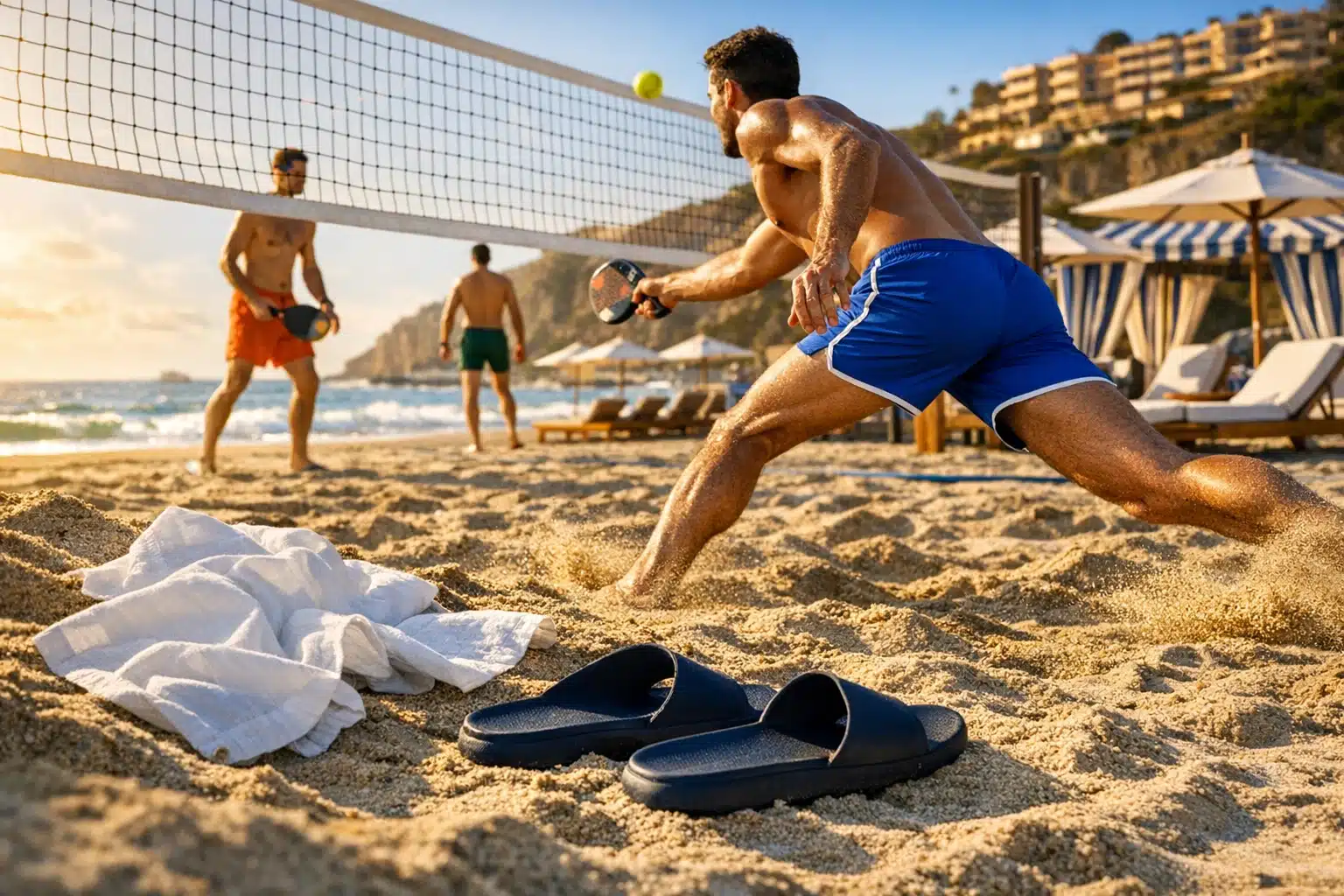
One reason this shift matters is practicality. Shorter trunks usually dry faster, bunch less when sitting, and move more easily during swimming, walking, or casual beach sports. A five-inch or seven-inch inseam has become especially popular because it offers a sweet spot between coverage and modern proportion. By comparison, very long shorts can feel dated in fashion-forward settings, while extremely brief cuts remain a niche preference rather than the default choice for most buyers.
Different silhouettes now serve different purposes more clearly than before:
- Tailored swim trunks work well for beach clubs, resort settings, and travel because they can pass as casual shorts when paired with a camp-collar shirt or linen overshirt.
- Square-cut swimsuits appeal to men who want a sportier, more streamlined look without choosing a traditional brief.
- Classic swim briefs remain visible in fashion editorials and competitive swim environments, though they are still more selective in mainstream wardrobes.
- Relaxed volley shorts continue to sell strongly because they combine comfort, athletic ease, and casual appeal.
Another important detail is waistband design. In 2026, many better-made options use partially elastic waists, smoother front panels, and less bulky drawstrings. That means the shorts feel secure without creating the gathered, puffy look that cheaper swimwear often produces. Small details like side vents, curved hems, and mesh that does not scratch the skin also make a surprising difference.
What makes this trend especially interesting is that it gives men more room to choose rather than more pressure to conform. A tall, slim man may prefer a shorter trunk for proportion. Someone with athletic thighs may like a slightly wider leg opening for comfort. A traveler packing light may want a clean hybrid short that moves from poolside lunch to an afternoon walk. In other words, 2026 is not ruled by one shape. It is ruled by better editing. The best swimwear looks considered, not complicated, as if it knows exactly what it wants to be the moment it hits the sunlight.
Fabric, Function, and Why Performance Details Matter More Than Ever
If the silhouette is what catches the eye first, fabric is what decides whether a pair of swim shorts becomes a favorite or ends up forgotten in a drawer. In 2026, men are paying closer attention to material quality, and brands are responding with more technical options that still feel stylish. The days when swimwear was judged only by color and cut are fading. Now the real test is how the garment behaves after a dive, under heat, or across a full day that includes walking, eating, sitting, and swimming again.
The most useful fabrics this year tend to share a few traits: fast drying, four-way stretch, shape retention, and resistance to fading from sun, chlorine, and salt. Recycled polyester blends remain common because they are durable and quick to dry, while elastane is often added for flexibility. Nylon still has a loyal following because it can feel softer and more premium to the touch, though fabric quality varies widely depending on weave and finish. The point is not that one fiber always wins. The point is that construction matters. A thoughtfully made recycled blend can outperform a poorly finished premium-feeling fabric very quickly.
Comfort features are also evolving in smart ways. Many men dislike rough mesh linings, especially when wearing trunks for hours. As a result, some 2026 styles use softer compression liners, boxer-brief style internal support, or finer mesh that reduces chafing. This is one of those unglamorous details that becomes memorable the minute it goes wrong. The best swimwear disappears while you wear it. You notice the beach, the water, the heat, and the day itself, not the irritation caused by your shorts.
Here are the features worth checking before buying:
- Quick-dry fabric that does not stay heavy after a swim
- Stretch that allows movement without sagging over time
- Flat seams or softer internal finishes to reduce friction
- Secure pockets, preferably with drainage or zip closures for travel use
- UV-resistant or fade-resistant performance claims from reputable makers
Sustainability is also becoming part of the quality conversation, though it should be judged carefully. Recycled fabric is useful, but it is not automatically a sign of superior design. A sustainable material paired with poor stitching, weak elastic, or flimsy hardware still creates short-lived clothing. The more meaningful shift is that some brands are now combining lower-impact textiles with genuinely better workmanship, which gives consumers a more durable product and potentially reduces replacement frequency.
In practical terms, 2026 swimwear is being shaped by the idea that one garment should do more than one job. It should hold up during a swim, feel presentable at lunch, and remain comfortable on a long, hot afternoon. That expectation is pushing the category forward. The fabric story may not be the flashiest chapter in summer style, but it is often the one that separates a merely attractive pair from a reliable one.
Color, Print, and Design Language: From Washed Neutrals to Expressive Pattern
Color trends in men’s swimwear for 2026 are broad enough to welcome both minimalists and attention seekers, which is one reason this season feels especially wearable. On one side, soft neutrals are gaining ground: faded olive, warm sand, chalky blue, stone, rust, muted terracotta, and sun-washed charcoal. These tones feel relaxed, sophisticated, and easy to pair with summer staples like white shirts, knitted polos, and simple leather or rubber sandals. They also age well visually. A well-cut trunk in a dusty neutral rarely looks tied to only one holiday or one year.
On the other side of the spectrum, expressive prints are not disappearing. They are simply becoming more refined. Instead of the loud, chaotic graphics that dominated some earlier resort seasons, 2026 leans toward prints with clearer identities. Think botanical patterns with more breathing room, retro stripes, geometric repeats, watercolor-style gradients, and abstract motifs inspired by surf culture, Mediterranean tilework, or vintage travel posters. These designs can feel lively without becoming cartoonish. The difference is restraint. Good pattern now looks designed, not dumped onto fabric.
Placement and scale are crucial. Smaller men can be overwhelmed by oversized prints, while broader frames often carry medium-to-large motifs more comfortably. Vertical stripe effects or side-panel contrasts can subtly influence visual proportion, making the legs appear longer or the shape look cleaner. This is why design language matters beyond simple taste. Color and pattern shape the eye’s first impression.
Several details are especially relevant this year:
- Contrast piping, which adds a sporty vintage touch without overwhelming the garment
- Matte hardware and tonal drawcords, which create a cleaner finish than shiny plastic trims
- Color-blocking, especially in combinations like navy and cream, green and black, or clay and off-white
- Subtle embroidery or discreet logos, replacing oversized branding
An interesting 2026 development is the return of “quiet confidence” in design. Instead of relying on giant logos or novelty prints to make a statement, many stronger pieces use thoughtful color combinations and balanced details. A muted sea-green trunk with crisp piping can look more current than a neon pair shouting for attention from thirty feet away. That does not mean bright color is out. Tangerine, cobalt, lemon, and hot pink still appear, especially in vacation capsules and fashion-led collections. But they work best when the cut is disciplined and the styling around them stays simple.
There is also a mood shift happening. Swimwear is no longer treated only as functional gear or throwaway holiday clothing. It is part of the overall wardrobe story. That is why colors now connect more closely with ready-to-wear trends. The same earthy tones, retro accents, and cleaner finishes seen in menswear more broadly are finding their way into swim collections. The result is a category that feels more grown-up, more versatile, and frankly more interesting to shop.
Fit, Confidence, and Styling: How to Choose What Actually Works for You
No swimwear trend matters if the fit feels wrong, and this is where many men still struggle. They may understand what is fashionable in theory, yet hesitate when trying something shorter, trimmer, or more expressive than what they usually wear. The good news is that 2026 trends are unusually adaptable. The current market offers enough variation in length, leg opening, waistband structure, and fabric stretch that most men can find something modern without dressing outside their comfort zone.
The first principle is proportion. Men with shorter legs often benefit from mid-thigh trunks because a higher hem visually lengthens the body. Taller men can wear slightly longer styles without losing balance, although a very long short may still flatten the silhouette. Athletic builds usually look strong in clean, straight cuts with enough room through the thigh. Slimmer builds can gain visual presence from prints, subtle texture, or a slightly fuller leg. Men who want more support may prefer lined styles or square cuts, especially for active swimming rather than lounging.
It also helps to match the swimwear to the setting rather than treating every pair as universal. A pool training session, a family beach trip, and a hotel rooftop all suggest slightly different choices. One pair might be technical and simple. Another might feel more polished and tailored. This does not mean building an enormous collection. It means understanding the role of each piece. Good style gets easier when each item has a job.
Useful rules of thumb include the following:
- If you are trying shorter trunks for the first time, start with a seven-inch inseam in a dark or muted color.
- If your thighs feel restricted, size up or choose a wider leg opening rather than forcing a slimmer cut.
- If you want more versatility, avoid heavy branding and choose shades that work with shirts you already own.
- If you are pale or burn easily, darker colors and denser fabrics may feel more secure, but sun protection still matters far more than garment color alone.
Styling matters more than many people think. A great swim short can lose impact if paired with a worn-out T-shirt and clunky flip-flops. Likewise, an average trunk can look better when styled with intent. In 2026, the strongest combinations tend to be simple: camp-collar shirts, textured knit polos, open linen shirts, clean slides, canvas espadrilles, and understated sunglasses. The aim is not to dress up swimwear too much. It is to make it feel integrated with the rest of your summer wardrobe.
There is also a psychological side to all this. Swimwear leaves less room to hide behind layers, so fit often affects confidence more directly than other categories do. That is why comfort is not a minor issue. When the waistband sits well, the liner does not irritate, and the cut feels balanced, posture changes. Movement loosens. The wearer looks more at ease, and that ease reads as style. Sometimes confidence is not a dramatic inner transformation. Sometimes it is just a better hemline, a better fabric, and a pair of shorts that stop fighting you the minute the day begins.
Smart Buying Guide for 2026: What Is Worth Your Money and What Will Last Beyond One Summer
For most shoppers, the biggest question is not which trend looks interesting on a screen. It is which pieces are worth buying in real life. Men’s swimwear for 2026 offers plenty of variety, but the smartest purchases share the same foundation: reliable fit, solid fabric, visual versatility, and construction that survives repeated wear. If a pair looks great online but twists after washing, sags when wet, or feels uncomfortable after an hour, its trend value drops to zero very quickly.
A practical way to shop is to build from categories instead of impulses. One neutral trunk in a modern inseam can handle most situations. A second pair with stronger color or pattern adds personality. If you swim laps or play beach sports, a third option with more technical performance might make sense. This is a better strategy than buying several similar pairs that all solve the same problem. Think in terms of function first, then mood.
Before buying, it helps to evaluate each pair against a short checklist:
- Does the inseam suit how you actually like to dress?
- Will the fabric feel comfortable after getting wet?
- Can the color work with at least two or three shirts or cover-ups you already own?
- Is the liner acceptable, or will it become annoying halfway through the day?
- Are the pockets, drawstring, and stitching good enough to justify the price?
Price alone is not a perfect guide. A higher cost can reflect better fabric, stronger finishing, and more refined design, but not always. Sometimes you are paying for branding or seasonal hype. On the other hand, very cheap swimwear often cuts corners in exactly the areas that matter most: elastic quality, internal comfort, colorfastness, and seam durability. The best value usually sits in the middle, where thoughtful design meets reasonable materials and dependable construction.
Care also plays a larger role than many buyers admit. Rinsing salt or chlorine out soon after use, avoiding prolonged sun-baking while the shorts are wet, and skipping harsh heat in the dryer can extend a garment’s life significantly. Swimwear lives a hard life. It meets sun, sand, chemicals, friction, and frequent washing. Treat it carelessly and even a good pair can fade early. Treat it well and it can stay sharp for several seasons.
For the target audience of this trend cycle, the takeaway is straightforward. If you want to look current in 2026, you do not need the loudest print, the briefest cut, or the most expensive label. You need swimwear that feels intentional on your body and useful in your routine. A tailored trunk in a smart color, a comfortable lining, and a fabric that performs well will take most men very far. The strongest trend this year is not flash. It is clarity: better choices, better fit, and a summer wardrobe that works as hard as it relaxes.