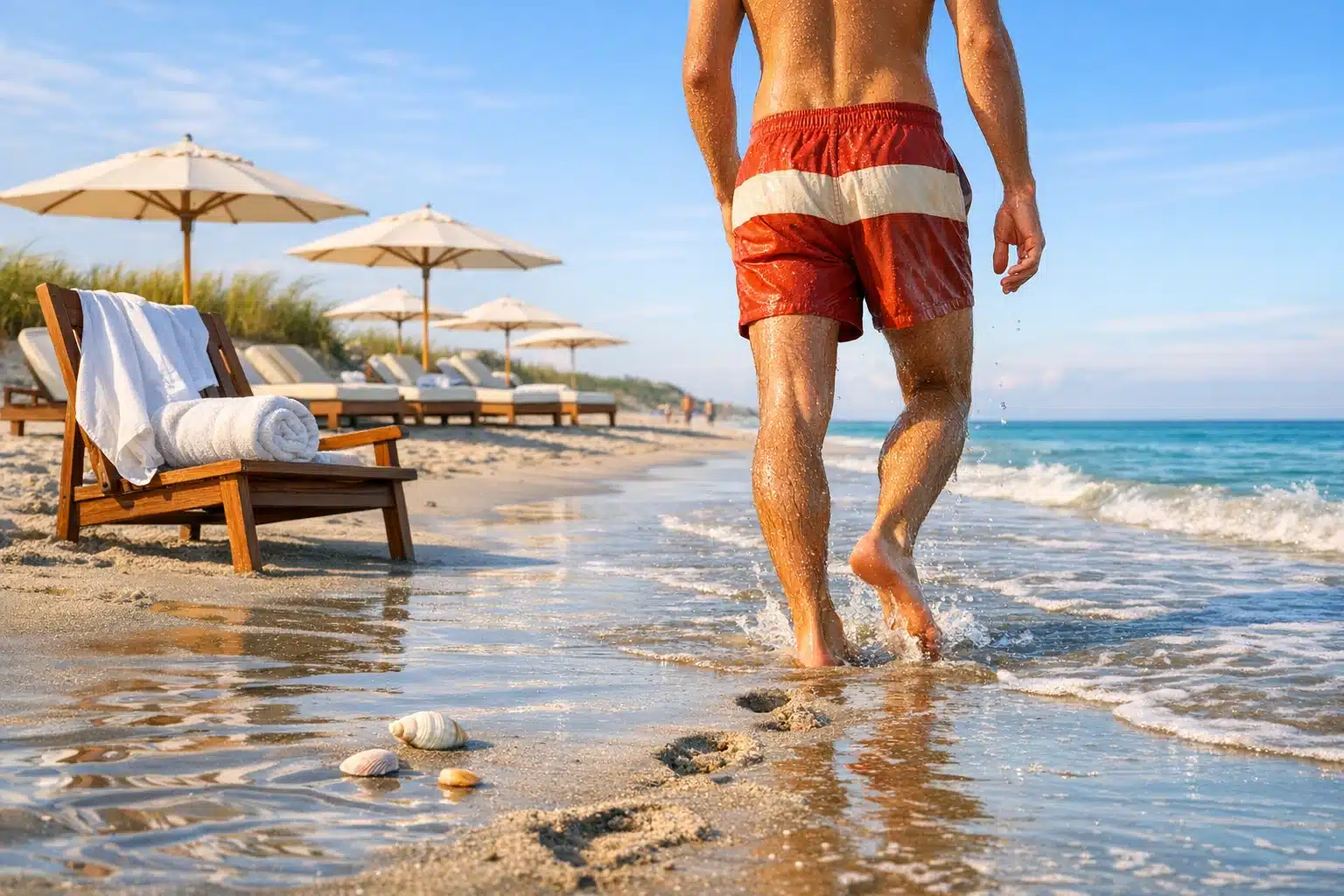
 Artificially generated image
 Confidence You Can See: Hot Men’s Swimwear Trends 2026
Swimwear now sits at the crossroads of function, fashion, and everyday confidence, which is why the right choice matters more than many men expect. A suit that fits well can improve movement in the water, make hot days more comfortable, and create a cleaner silhouette on shore. Trends for 2026 also bring sharper colors, smarter fabrics, and more versatile cuts. This guide breaks down what to look for before you buy.
Article outline:
- Why men’s swimwear in 2026 is becoming more tailored, versatile, and fabric-driven
- How to choose the right fit based on body proportions, activity, and preferred coverage
- Which colors and patterns are shaping the season, from quiet neutrals to bolder statements
- What modern fabric features actually improve comfort, drying time, and long-term wear
- How to turn all of this into a practical buying decision that feels stylish and easy to wear
Outline and Context: Why Men’s Swimwear in 2026 Deserves a Closer Look
Men’s swimwear used to be treated as a simple seasonal purchase: grab a pair of trunks, make sure they are not too loud, and hope they last until late summer. That approach is changing. In 2026, swimwear is being designed with many of the same considerations used in sportswear and casual fashion. Brands are paying closer attention to silhouette, stretch, support, sustainability, and how a suit performs outside the water. For many men, that matters because swim shorts are no longer limited to the beach or pool. They are often worn on holiday walks, at outdoor cafés, during boat trips, and even as part of a relaxed warm-weather outfit.
The biggest shift is that fit has become more intentional. Instead of one generic long short for everyone, there are now clearer options built around inseam length, leg shape, waistband comfort, and activity level. A man who swims laps, for example, needs something very different from someone who wants a polished pair of trunks for resort wear. The same is true for fabric. Soft peach-finish shells, four-way stretch weaves, compression liners, and quick-dry recycled blends are now common talking points, not niche upgrades.
Explore 2026 men’s swimwear trends with insights on fit, fabrics, colors, and confidence‑boosting styles designed for comfort and modern appeal.
This guide follows that exact path. It starts with the anatomy of a good fit, because even the most fashionable color cannot rescue an awkward cut. It then moves into the palettes and patterns gaining momentum for 2026, from crisp marine shades to sophisticated retro prints. After that, it looks at fabric and construction details that can improve comfort in real life. Think of modern swimwear as a small but important piece of engineering with style stitched into it. When it works, you stop adjusting it and start enjoying the day.
How to Choose the Right Swimwear Fit
Choosing the right swimwear fit begins with a simple question: what do you want the suit to do? If the answer is active swimming, a streamlined short, square-cut style, or athletic trunk usually makes the most sense. If the goal is relaxed beach wear, classic swim shorts with a balanced inseam offer greater versatility. For pool parties, travel, or mixed use, the sweet spot is often a tailored trunk that looks clean on land but still moves well in the water.
In practical terms, three details shape fit more than anything else: inseam length, waist security, and leg opening. Shorter inseams, usually around 5 inches, show more thigh and tend to look sharper on men with average to long legs. Mid-length options around 6 to 7 inches are the most universally wearable because they balance coverage and mobility. Longer cuts around 8 to 9 inches can work for taller men or those who prefer more coverage, but they should still taper enough to avoid a heavy, bulky appearance. When the leg opening is too wide, shorts can flare outward and make the whole fit feel sloppy. When it is too tight, movement becomes restricted and the suit may ride up.
The waistband matters just as much. A full elastic waist is easy and forgiving, especially for casual wear. A flat-front waistband with some elastic at the sides often looks more refined and can bridge the gap between swimwear and daywear. Drawcords should secure the fit without forcing the fabric to bunch awkwardly. One useful fitting test is to sit, squat, and walk briskly when trying on a pair. If the waistband digs in, the liner pulls, or the hem sticks to the thigh, it will only feel worse after a swim.
-
Lean or shorter builds often benefit from shorter inseams and smaller-scale prints.
-
Broader or more muscular frames usually look balanced in mid-length trunks with a cleaner leg line.
-
Men who carry weight around the midsection often prefer darker solids, vertical design elements, or trunks with a structured waistband.
It is also worth matching the cut to your comfort level rather than chasing a trend blindly. Confidence often comes from proportion, not from wearing the shortest or boldest option in the shop. A good suit should feel like it belongs to your body and your routine. Like a well-cut summer shirt, it should sit naturally, move without complaint, and let you forget about it once the day begins.
Trending Colors and Patterns for 2026
The color story for men’s swimwear in 2026 is less about shock value and more about personality with control. Designers are leaning into tones that feel fresh, coastal, and wearable, which means the palette is broader than the usual navy-versus-neon debate. Marine blue remains a staple, but it is being joined by deeper ink shades, softened teal, sea-glass green, clay red, sun-faded orange, and warm sand neutrals. These colors feel modern because they connect with natural landscapes while still standing apart from predictable basics.
One noticeable direction is the rise of washed and mineral-inspired tones. Instead of ultra-saturated tropical brights, many trunks now use colors that look slightly sun-aged or salt-softened. That subtle treatment gives even bold hues a more mature appearance. A muted coral or dusty citron can be much easier to wear than a fluorescent version, especially for men who want color without feeling overexposed. Off-white, oat, and stone are also appearing more often in premium collections, usually paired with tidy tailoring and textured fabrics.
Patterns are evolving in a similar way. Loud all-over novelty prints are giving ground to designs with stronger graphic discipline. Expect to see more of the following:
-
Retro stripes inspired by 1970s and 1980s resort styling
-
Micro-geometrics that read as texture from a distance
-
Abstract botanical prints with fewer colors and cleaner spacing
-
Wave, tile, and sun motifs that nod to travel without becoming costume-like
-
Vertical paneling and side details that visually lengthen the leg
For men uncertain about print, scale is the easiest place to start. Smaller patterns generally look more refined and are easier to pair with a linen shirt or plain tee after swimming. Larger prints can be effective, but they tend to dominate the outfit and call more attention to the body. That is not automatically a drawback; it simply means the choice should be deliberate.
Skin tone also plays a role. Cooler complexions often suit deep blues, emeralds, and crisp monochrome. Warmer skin tones can carry olive, rust, cream, and terracotta particularly well. If in doubt, a solid trunk with one interesting detail, such as contrast piping or a textured weave, is often more versatile than a busy print. The 2026 message is clear: color should add character, not noise. The best patterns feel like well-chosen travel memories rather than a suitcase shouting from across the beach.
Fabric and Comfort Features in Modern Swimwear
If fit decides whether swimwear looks right, fabric determines whether it feels right. Modern swimwear has improved significantly because manufacturers now treat material performance as a major selling point rather than a hidden technical note. The typical men’s swim trunk is still built around nylon or polyester, but the quality of those fibers, the weave structure, and the added stretch content make a big difference in how the garment behaves during a long day of heat, water, and movement.
Polyester remains popular because it generally resists chlorine better than many older fashion fabrics and holds color well over time. Nylon often feels softer and smoother against the skin, which is why it is still widely used in premium trunks. Many brands blend these fibers with elastane or spandex to improve flexibility. In everyday terms, a small amount of stretch helps when climbing pool ladders, sitting on a deck chair, or walking from the beach to lunch. Too much stretch, however, can make trunks feel clingy or less durable after repeated exposure to sun and chemicals, so balance matters.
Lining has also changed. Traditional mesh liners still appear in many classic swim shorts, but some men find them scratchy or restrictive. Compression-style liners are becoming more common because they provide support, reduce chafing, and feel closer to performance underwear. They are especially useful for travel days or active beach routines. Other comfort features worth noticing include:
-
Four-way stretch fabric for easier movement in multiple directions
-
Quick-dry finishes that reduce post-swim discomfort
-
Flatlock or bonded seams that minimize rubbing
-
Laser-cut drainage eyelets in pockets to prevent ballooning
-
UPF-rated textiles for added sun protection, often UPF 50 in higher-performance ranges
-
Recycled yarns made from post-consumer plastics or reclaimed marine waste
Texture is another quiet upgrade. Some 2026 swimwear uses brushed finishes for softness, while others favor crisp woven shells that hold their shape better and look more tailored. Hybrid swim shorts may even include water-repellent coatings and cleaner pocket designs so they can function beyond the beach. That said, marketing language should not replace common sense. A good fabric will not make every trunk perfect. The best approach is to consider your real habits. If you spend time in chlorinated pools, prioritize durability. If you pack light for travel, choose quick-dry materials that can be rinsed and reworn. If you hate irritation, inspect the liner, seams, and waistband before anything else. Comfort is often decided in the details you notice only after an hour in the sun.
Conclusion: Picking the Right 2026 Swimwear for Your Style, Comfort, and Confidence
For men shopping in 2026, the smartest swimwear choice is rarely the loudest print or the trendiest cut on a mannequin. It is the pair that matches your build, suits your activity, and feels comfortable from the first step onto warm pavement to the last towel-off of the day. Start with fit, because that is the foundation. A well-judged inseam, a secure waistband, and a leg opening that neither flaps nor grips too tightly will do more for your appearance than any fashionable detail added afterward.
Once the fit is right, color becomes an opportunity rather than a risk. A rich blue, muted green, mineral red, or clean neutral can all look current if the shade feels intentional and works with your skin tone. Patterns should support the look rather than overwhelm it. Smaller geometrics, refined stripes, and edited tropical motifs offer personality without making the garment harder to wear. Fabric then brings the decision home. Quick-dry shells, comfortable linings, stretch, and chlorine resistance may sound technical, but they directly affect how often you choose that suit and how long it stays in good condition.
If you want a simple buying checklist, keep this in mind:
-
Choose the suit based on your main use: laps, beach days, travel, or all-purpose wear.
-
Try mid-length trunks first if you are unsure; they are the easiest starting point.
-
Check the liner, seams, and waistband before focusing on pattern.
-
Pick a color you can imagine wearing with a shirt, sandals, or sneakers after swimming.
-
Value comfort and proportion over novelty.
The best swimwear is not just seen; it is trusted. It lets you move naturally, feel put together, and enjoy the setting instead of thinking about your clothes. That is what makes the current direction in men’s swimwear so appealing. It offers more choices, better materials, and a clearer path to personal style. Whether you lean classic or modern, subtle or expressive, 2026 gives you room to dress for the water without leaving yourself behind.