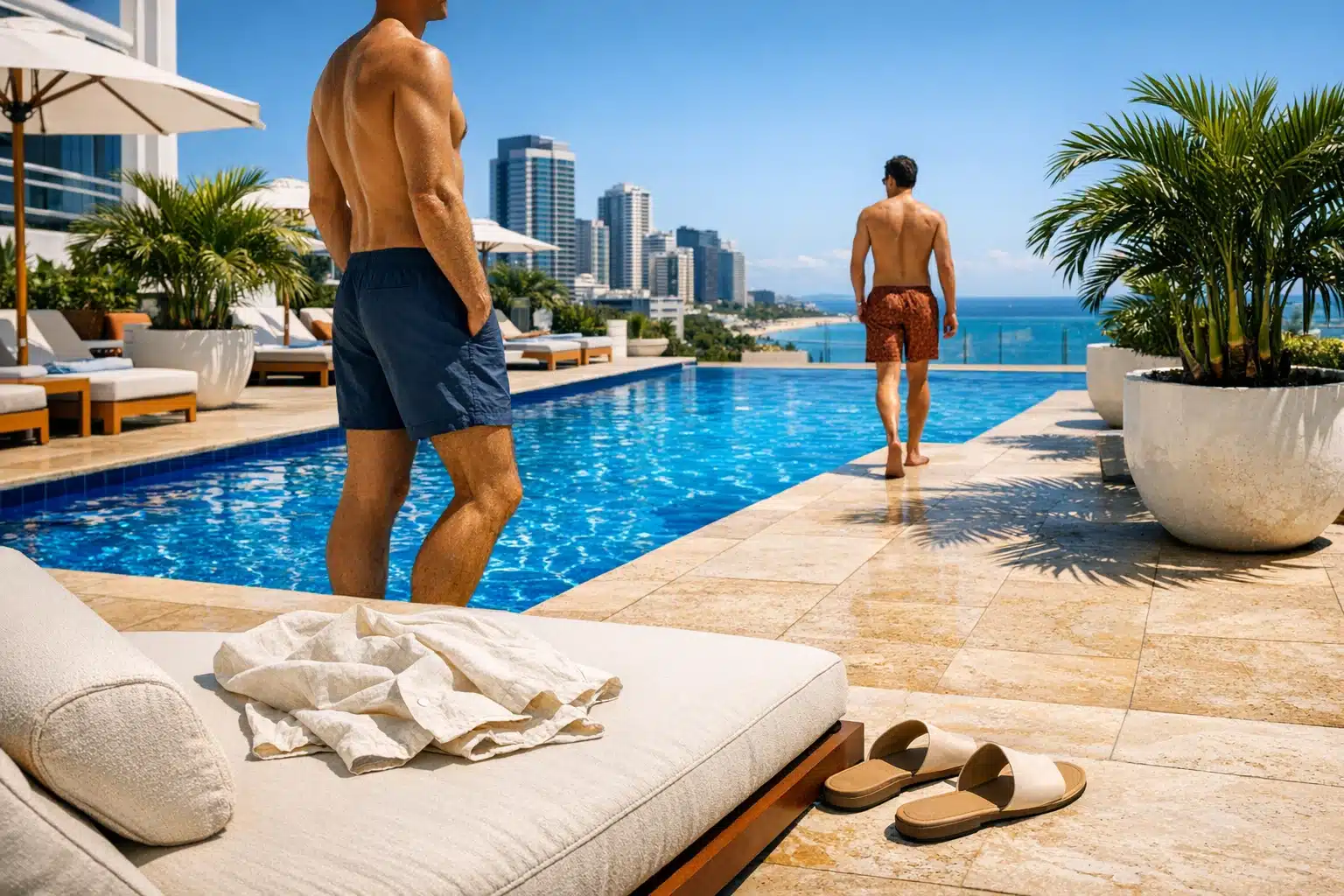
 Artificially generated image
 Confidence You Can See: Hot Men’s Swimwear Trends 2026
Swimwear does more than cover the basics; it shapes comfort, movement, and confidence from the first step onto the sand. In 2026, men are choosing pieces that balance clean design with practical details, so fit matters as much as color. This guide breaks down how to pick a flattering cut, which shades and prints are rising, and what fabric features make a real difference in heat, water, and long afternoons outdoors.
Outline
This article is organized around five practical parts:
- Why fit is the starting point for better swimwear choices
- How different cuts suit different builds, activities, and style goals
- Which colors and patterns are shaping 2026 men’s swimwear collections
- What modern fabrics and comfort features actually improve wear
- How to shop, style, and care for swimwear so it lasts beyond one season
Explore 2026 men’s swimwear trends with insights on fit, fabrics, colors, and confidence‑boosting styles designed for comfort and modern appeal.
1. Why the Right Fit Matters More Than Almost Anything Else
When men talk about swimwear, color often gets the attention first, but fit is what decides whether a pair becomes a favorite or stays folded in a drawer. A good fit affects how the suit looks, how freely you move, and how relaxed you feel when walking from the pool to lunch or diving into open water. If the waistband digs in, the lining bunches, or the leg opening rides up, even the most stylish print quickly loses its charm.
The first area to assess is inseam length. Shorter inseams, often around 4 to 5 inches, create a sportier look and can visually lengthen the leg. Mid-length trunks, usually 5.5 to 7 inches, remain the most versatile option because they work well on many body types and feel current without looking extreme. Longer styles, such as board shorts, offer more coverage and can be useful for surfing or casual beach wear, though they may appear bulkier on shorter frames.
Next comes the rise and waistband. A mid-rise waist is generally the easiest choice because it sits securely without feeling old-fashioned or overly tight. Elastic waistbands with drawcords offer flexibility, while flat-front constructions often look neater and less bulky under a shirt. The leg opening also deserves attention. A narrower opening gives a cleaner silhouette, but it should never pinch the thigh. Comfort at the leg is essential because saltwater, sun, and motion make small irritations feel larger.
When trying on swimwear, focus on a few clear signs:
- The waistband stays in place without needing constant adjustment.
- The seat looks smooth rather than saggy or overly stretched.
- The leg opening stays comfortable when walking, sitting, and bending.
- The fabric does not turn transparent or strained when wet.
Think of fit as architecture. The pattern, the fabric, and the color all depend on this foundation. If the structure is right, the rest of the style choices become much easier, and confidence tends to follow without effort.
2. Choosing a Swimwear Cut for Your Build, Routine, and Personal Style
There is no single “correct” swimwear cut for all men, because the right choice depends on build, planned activity, and the image you want to project. The useful question is not whether a style is fashionable in isolation, but whether it works for your body and your day. A suit for swimming laps, for example, should not be judged by the same criteria as one meant for a beach club or a resort weekend.
Swim briefs and square-cut trunks are often chosen by confident swimmers or men who prioritize performance. They reduce drag in the water, dry quickly, and show more leg, which can be flattering on men with athletic thighs or a compact frame. Mid-length trunks remain the broadest crowd-pleaser. They balance coverage and shape well, making them a practical option for men who want a modern look without stepping too far outside their comfort zone. Board shorts still have a place, especially for surfing and more rugged beach use, but they are no longer the automatic default for every situation.
Body proportions can guide selection without becoming rigid rules. Men with shorter legs may find that overly long shorts visually shorten the frame, while a shorter trunk creates cleaner lines. Taller men often wear mid-length or slightly longer styles with ease, especially if the print is controlled and the cut is not too wide. Men with broader waists may prefer structured waistbands, darker solids, or vertical details that simplify the silhouette. Men with slimmer builds can often use side stripes, bolder prints, or slightly shorter lengths to add visual presence.
A practical fitting approach looks like this:
- If you swim often, prioritize support, secure drawcords, and low-drag shapes.
- If you mainly lounge or travel, focus on comfort, pockets, and all-day wearability.
- If you want one pair to do almost everything, choose a mid-length trunk in a solid or restrained pattern.
There is also an emotional side to the decision. The right cut should feel like an ally, not a test. When you put it on, you should stand a little straighter without needing to convince yourself. That quiet ease is usually the best sign that the shape is working.
3. Trending Colors and Patterns for 2026
Color trends for 2026 suggest a smart shift away from loud novelty for its own sake and toward shades that feel polished, wearable, and still distinct. Men’s swimwear is moving into a mood that mixes nature-inspired tones with sharper accents. Think of the palette as coastline meets city rooftop: sea glass greens, washed navy, mineral blue, sand beige, rust, espresso brown, and muted coral all appear poised to stand out. These tones feel relaxed without becoming dull, and they pair well with common summer basics such as white shirts, cream knits, and simple sandals.
Alongside these earthy tones, brighter accent colors are expected to show up in more controlled ways. Citrusy orange, electric blue, and vivid yellow are likely to appear as trim, side piping, waistband contrast, or contained blocks rather than overwhelming all-over color. This reflects a wider trend in menswear: energy is welcome, but it is often framed by cleaner design. Black remains relevant too, especially in minimalist trunks with sharp tailoring or matte finishes, while off-white and stone create a quietly expensive look when handled with good fabric and proper lining.
Patterns are also becoming more thoughtful. In place of chaotic tropical prints, 2026 leans toward refined visual texture. Some of the strongest directions include:
- Retro vertical stripes that elongate the frame
- Abstract geometrics inspired by tiles, waves, or topographic lines
- Small-scale botanical or leaf motifs with restrained contrast
- Color-fade effects that echo sunset tones without looking theatrical
Choosing among these trends depends partly on skin tone and partly on personality. Cooler undertones often work well with navy, slate, teal, and icy greens. Warmer undertones usually pair naturally with terracotta, olive, cream, and sun-faded red. Men who want an easier entry into trend-led dressing can start with a classic solid trunk and add modernity through texture, piping, or a subtle side panel.
The strongest style move for 2026 is not simply “wearing what is trending.” It is choosing a color story that feels composed. When the tone suits your complexion and the pattern matches your energy, the result looks more modern than any loud print chosen only for attention.
4. Fabric, Stretch, and Comfort Features That Matter in Real Life
Modern swimwear has improved significantly because fabric technology has become more sophisticated. Today, comfort is not only about softness; it is about how a suit handles water, heat, movement, and repeated use. The main fibers in quality swimwear are still nylon or polyester blends mixed with elastane, but the difference lies in how those materials are engineered.
Nylon-based swimwear is often praised for a smooth, luxurious hand feel and a slightly more refined appearance. It can feel softer against the skin, which makes it a strong choice for style-focused trunks and premium resort wear. Polyester, on the other hand, is often better for chlorine resistance and long-term color retention, which is why frequent swimmers and pool users may prefer it. Many well-made suits now combine the strengths of both, or use recycled versions of these fibers to reduce environmental impact without sacrificing performance.
Elastane content is another important detail. A blend with roughly 10 to 20 percent elastane usually offers enough stretch for movement while helping the garment recover its shape after wear. Too little stretch can make the suit stiff; too much can feel compressive or lose structure over time if the fabric quality is poor. Quick-dry finishing is now common, but not all quick-dry fabrics behave the same way. Denser premium fabrics may take slightly longer to dry than ultra-light ones, yet they often hang better and look more flattering.
Useful comfort features include:
- Four-way stretch for easier movement when swimming or walking
- Soft mesh or compression lining that supports without chafing
- Flatlock or bonded seams that reduce rubbing
- UPF-rated fabric for added sun protection
- Secure zip or hidden pockets that do not balloon in water
One small detail can change the entire experience: the lining. Cheap mesh linings often scratch or bunch after a few wears, while better linings feel almost invisible. Waist drawcords matter too; internal cords create a cleaner appearance, while external ones are easier to adjust quickly. Some newer designs also include laser-cut drainage, anti-odor finishing, or lightweight compression panels.
In practice, the best fabric is the one that suits how you actually use swimwear. A suit for lap swimming, beach holidays, hotel lounging, and long walks may not be the same piece. Comfort is built from details, and those details are worth reading on the label before you buy.
5. How to Shop Smarter, Style Better, and Feel More Confident in 2026
Confidence in swimwear usually comes from preparation rather than bravado. Men often assume that confidence is a personality trait, but in clothing it is more often the result of good fit, sensible fabric, and a design that feels aligned with your taste. That is why shopping with a plan matters. Instead of buying the first pair that seems acceptable, it helps to think about where you will wear it, how long you will wear it, and what you want it to do visually.
Start with purpose. If you need one dependable pair, choose a mid-length trunk in navy, olive, charcoal, or a muted pattern. These shades are easy to style and do not date quickly. If you already own a safe option, 2026 is a strong year to add a second pair with more character, perhaps a vertical stripe, a mineral green, or a rust tone with subtle contrast trim. That way, your wardrobe covers both function and personality without relying on extremes.
Styling is simpler than many men think. Swimwear rarely stands alone for long, especially on holidays or beach days. It is part of a wider summer uniform. A sharp pair of trunks works best with pieces that keep the look coherent:
- A lightweight camp-collar shirt for easy coverage
- A plain linen shirt for a cleaner, more mature finish
- Minimal slides or leather sandals instead of bulky athletic shoes
- Simple sunglasses and a towel in a related, not matching, color
Care also affects confidence because a worn-out suit never feels as good as it once did. Rinse swimwear after saltwater or chlorine, avoid wringing it aggressively, and let it dry flat or in shade when possible. Heat and harsh detergents shorten the life of elastane, dull color, and weaken recovery. Even a well-made suit can lose its shape if treated carelessly.
Most of all, remember that the goal is not to hide your body under trend language or to chase someone else’s ideal. The goal is to choose a suit that makes movement feel easy and appearance feel intentional. When a pair fits well, dries properly, and suits your style, it stops being something you worry about and becomes part of enjoying the day.
Conclusion for Men Shopping Swimwear in 2026
If you want swimwear that earns its place in your wardrobe, begin with fit, then build outward into color, pattern, and fabric. Mid-length trunks remain the easiest all-around option, but the best choice is always the one that suits your proportions, routine, and comfort level. For 2026, look for composed colors, cleaner prints, and practical fabric features such as stretch, quality lining, and quick-drying performance. A thoughtful purchase will not only look better on the beach or by the pool, it will also feel better from morning swim to late afternoon sun.