 Artificially generated image
 Confidence You Can See: Hot Men’s Swimwear Trends 2026
Swimwear sits at the crossroads of function, style, and self-assurance, which is why choosing it well matters more than many shoppers expect. The right pair can improve mobility, cut down on chafing, and make a long day by the water feel far more relaxed. In 2026, men’s swimwear is also getting smarter, with cleaner fits, more expressive color stories, and textiles built for real comfort. Explore 2026 men’s swimwear trends with insights on fit, fabrics, colors, and confidence‑boosting styles designed for comfort and modern appeal.
Outline: What This Guide Covers and Why It Matters
Before getting into cuts, colors, and material technology, it helps to see the bigger picture. This article follows a simple path: first, it explains how to choose the right fit; next, it looks at the smaller design details that separate a decent pair from a truly comfortable one; then it turns to the colors and patterns shaping 2026; and finally, it breaks down the fabrics and comfort features worth paying attention to when you shop. That order matters because swimwear is one of those categories where appearance and performance are tightly connected. A pair that photographs well but rubs at the inner thigh, sags after a swim, or stays wet for too long will not earn much wardrobe loyalty.
For many men, swimwear shopping still carries a familiar tension. The choices seem simple on the rack, yet the differences become obvious the moment they are worn. Length changes visual balance. Lining affects support. Pocket placement can alter how the shorts hang. Fabric weight influences drying time, movement, and even confidence when stepping out of the water. In other words, small construction decisions create a big shift in the actual experience of wearing swimwear.
2026 makes this especially relevant because the market is moving away from one-note designs. Brands are offering more mid-length cuts, more tailored silhouettes, and more technical materials than before. There is also a stronger split between casual lifestyle swim shorts, sport-focused options, and hybrid pairs designed to work near the water and beyond it. That gives shoppers more freedom, but it also means there is more to evaluate.
Here is the roadmap in plain terms:
• Fit decides how the garment moves, flatters, and supports.
• Color and pattern shape first impressions and personal style.
• Fabric and comfort features determine whether the pair feels good after hours of wear.
If you keep those three pillars in mind, swimwear stops feeling like a guessing game. Instead, it becomes a practical choice shaped by your body type, your activity level, and the atmosphere you want to project. Think of this guide as a fitting room conversation with better lighting and fewer rushed decisions. By the end, you should be able to spot the difference between a trend worth trying and a detail that only looks good on a product page.
How to Choose the Right Swimwear Fit
Fit is the foundation of good swimwear, and it begins with knowing what kind of use the pair is meant for. A relaxed resort short, a lap-swimming trunk, and an all-purpose beach short do not behave the same way. Many men default to the familiar, often choosing a size and cut that resemble the last pair they bought, but 2026 style leans more intentional. Instead of asking only whether the waistband closes, it is better to ask whether the garment suits your frame, your movement, and the setting where you will wear it.
The quickest place to start is inseam length. This single measurement has a major visual effect:
• 3 to 5 inches tends to look sportier, younger, and more leg-forward.
• 5 to 7 inches is the current sweet spot for versatility and broad appeal.
• 7 to 9 inches feels more traditional and offers extra coverage, though it can shorten the look of the leg on some builds.
Men with a shorter frame often benefit from a slightly shorter inseam because it helps elongate the leg visually. Taller men can wear nearly any length, though mid-length shorts often create the most balanced line. If you have larger thighs, look for a leg opening that allows natural movement instead of squeezing the upper leg. If you are leaner, avoid overly wide cuts that collapse into a boxy shape when wet.
Cut matters just as much as length. Swim briefs and square-cut styles provide closer support and less drag, which makes them useful for training or serious swimming. Classic swim trunks offer an easy middle ground, combining coverage with mobility. Board shorts remain relevant for surfing and certain beach settings, but their longer shape is not automatically the most flattering or comfortable choice for everyone. In fact, some men discover that a well-cut 5-inch trunk looks sharper and feels less cumbersome than a loose, knee-skimming short.
When trying on swimwear, do not rely on the mirror alone. Walk, sit, bend, and squat. The waistband should feel secure without digging. The seat should lie smoothly rather than pulling tight across the back. The front rise should feel supportive but not restrictive. Wet conditions also matter, so imagine how the fabric will behave when heavier. If a pair already shifts too much in the fitting room, it is unlikely to improve after a swim.
A useful rule is to choose the smallest size that still allows easy movement and clean drape. Swimwear that is too large usually looks more casual, but it can also bunch, twist, and fill with water. Swimwear that is too tight may emphasize every line in a way that feels awkward rather than polished. The right fit looks composed and feels almost forgettable, which is exactly what many men want: security without fuss, style without stiffness, and a silhouette that works before, during, and after the swim.
Small Fit Details That Make a Big Difference
Once the overall cut is right, the finer points of construction begin to matter. This is where modern swimwear quietly separates itself from older, rougher designs. Men often focus on length and color first, yet comfort is usually decided by the details you barely notice on the hanger. Waistbands, liners, seams, vents, and pockets all shape how the pair behaves in motion and how it feels after an hour in the sun.
Start with the waistband. A fully elastic waistband is forgiving and convenient, especially for casual wear and vacation packing. A fixed waistband with a drawcord can look cleaner and sometimes feels more secure during active use. Many of the strongest 2026 designs combine both ideas: a partly structured waist for shape and an internal drawcord for adjustment. That hybrid approach helps the shorts stay in place without creating a stiff, board-short feel.
Liners deserve special attention because they can make or break a pair. Traditional mesh liners still appear in many affordable trunks, and they work well enough for short wear. However, many newer premium designs now use compression-style boxer brief liners or softer micro-mesh interiors. These options reduce friction and often provide better support around the upper thigh. For men who walk long distances in wet swimwear, that difference is not minor. It can be the line between a carefree afternoon and steady irritation.
Other details worth checking include:
• Flat or bonded seams, which usually feel smoother against the skin than bulky stitching.
• Side vents at the hem, which improve stride and keep mid-length shorts from feeling tight.
• Drainage eyelets in pockets, which help water escape instead of weighing the garment down.
• Secure zip or hidden pockets, useful for a card or key when moving between pool, café, and beach path.
Transparency is another overlooked issue. Some lighter fabrics can become more revealing when soaked, especially in pale shades. A decent lining or slightly denser weave helps prevent that problem. Likewise, stretch recovery matters. A short may feel soft in the fitting room, but if the fabric loses shape after one swim, the silhouette quickly becomes tired. Polyester-rich blends are generally better at holding structure and resisting chlorine than softer but less durable alternatives.
If you want a practical testing routine, use this checklist before buying: sit down, tighten the drawcord, raise one knee, check the seat, inspect the pocket bulge, and imagine wearing the pair for several hours rather than several minutes. Good swimwear should pass those simple tests without drama. Like a well-designed chair or a balanced running shoe, it should support the body quietly. The best pairs are rarely the ones shouting for attention; they are the ones that seem to understand exactly how you move.
Trending Colors and Patterns for 2026
Color is where personality enters the conversation, and 2026 has a more nuanced palette than the loud neon cycles that periodically dominate summer fashion. Instead of relying only on high-volume brightness, this season brings a mix of grounded tones, softened coastal shades, and carefully placed contrast. The result is a market that feels more wearable. Men who want subtle sophistication can find it, and those who prefer something punchier can still get visual impact without looking costume-like.
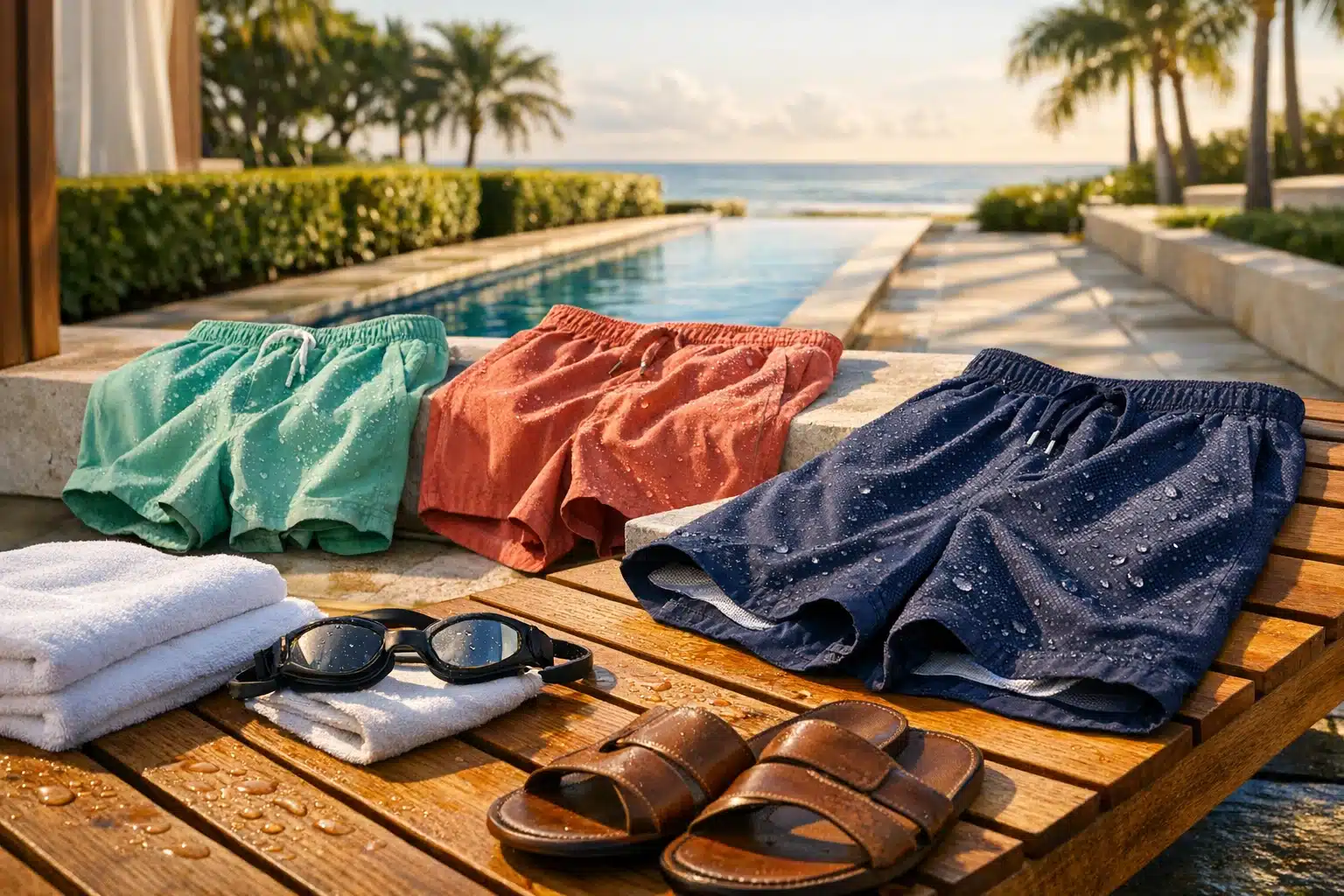
One strong direction for 2026 is refined aquatic color. Expect to see sea-glass green, deep teal, mineral blue, washed navy, and muted turquoise. These shades feel naturally at home around water and tend to flatter a wide range of skin tones. Darker blues remain reliable because they slim the silhouette visually and hide wear well, but the fresher versions feel less predictable than standard navy. A pair in teal or blue-green can look current without demanding too much attention.
Earth-influenced tones are also gaining ground. Clay, stone, sand, olive, rust, and sun-faded terracotta bring warmth and a modern resort feel. These colors work especially well in tailored mid-length trunks because they blur the line between swimwear and casual summer shorts. That versatility matters for travelers who want a single pair to carry them from beach towel to lunch table.
Patterns in 2026 are moving in two interesting directions:
• Retro stripes, especially vertical or broken stripes, which nod to vintage sport and help elongate the body.
• Micro-geometrics, which add texture from a distance without overwhelming the eye.
• Abstract botanicals and softened tropical prints, which feel more artistic and less literal than older floral swim motifs.
• Color-blocked panels, which can create a sharper athletic look and subtly shape proportions.
If you are unsure where to start, scale is everything. Smaller prints are generally easier to wear and more versatile across different settings. Larger, high-contrast motifs make a bigger statement but can dominate the outfit, especially on shorter inseams. Placement matters too. A darker base with lighter pattern accents often feels more refined than an all-over bright print.
There is also a confidence factor here. Men often assume bold color requires a bold personality, but the better question is whether the color suits the wearer’s comfort level and surroundings. A burnt orange short on a quiet Mediterranean-style terrace can feel elegant. A slate floral on a city rooftop pool can read modern and composed. Style is context as much as hue. The most successful 2026 swimwear colors are not just trend-led; they seem to belong exactly where they are worn, like sunlight landing on tiled water at the right time of day.
Fabric and Comfort Features in Modern Swimwear
If fit creates the outline and color creates the mood, fabric determines the lived experience. Modern swimwear has improved dramatically because textile development now focuses on movement, drying speed, durability, and softness all at once. The old compromise between a pair that looked good and a pair that felt tolerable is becoming less necessary. In 2026, many strong options manage to balance both.
The main materials still include polyester, nylon, and elastane, but the proportions and finishing treatments matter. Polyester is widely valued for chlorine resistance, shape retention, and color durability, which makes it a smart choice for frequent pool use. Nylon often feels smoother and softer to the touch, giving it a slightly more premium hand feel, though it may be less resistant to chlorine over time. Elastane, usually added in smaller percentages, introduces stretch so the garment moves with the body instead of against it. A blend that includes around 5 to 15 percent stretch fiber is common in shorts designed for active comfort.
Shoppers should also look for performance features that have clear everyday benefits:
• Four-way stretch, which improves mobility during swimming, walking, and sitting.
• Quick-dry finishing, which reduces that heavy, clingy feeling after leaving the water.
• UPF-rated fabric, with UPF 50 materials generally tested to block about 98 percent of UV radiation under standard conditions.
• Anti-chafe liners or smooth inner panels, which are especially useful for travel and full-day wear.
• Recycled yarn content, which appeals to buyers who want a lower-impact option without sacrificing performance.
Breathability matters too, even though swimwear spends time in water. Once you are dry, trapped heat can become the real issue. Lightweight weaves, laser-cut drainage details, and mesh-backed pockets help the garment transition more comfortably from sea to street. Some hybrid swim shorts are even designed to resemble casual shorts closely enough to be worn with an open shirt or polo. That flexibility is one reason modern swimwear feels more relevant to everyday dressing than it did a decade ago.
Still, not every feature deserves equal weight. Terms like “luxury,” “advanced,” or “performance” on a product label do not tell you much by themselves. Look instead for the practical signs: does the fabric spring back after stretching, does the lining feel smooth, do the seams lie flat, and does the material dry within a reasonable time? Those real-world checks often reveal more than marketing copy.
Conclusion: Smart Swimwear for Real Life
For men shopping in 2026, the best swimwear choice is rarely the loudest or the most expensive. It is the pair that fits your body cleanly, supports the way you move, and matches the settings where you actually spend your summer. A shorter or mid-length trunk may sharpen your proportions; a smarter liner may improve all-day comfort; a richer color or a controlled pattern may help you feel more current without trying too hard. If you focus on fit first, then evaluate fabric quality and finish with color, you will make better decisions every time. Good swimwear should let you enjoy the water, not keep adjusting for it. That is the real trend worth following.