 Artificially generated image
 Confidence You Can See: Hot Men’s Swimwear Trends 2026
Swimwear sits at an unusual crossroads: it has to perform in water, hold its shape in heat, and still make the wearer feel at ease when very little else is being worn. That is why a good fit matters more here than in most parts of a wardrobe. In 2026, men are looking beyond basic trunks and paying closer attention to cut, textile technology, and color strategy. The result is a market full of options that rewards a more informed choice.
Outline:
- How fit changes comfort, proportion, and confidence
- How inseam, waistband, and support affect different activities
- Which colors and patterns are shaping men’s swimwear in 2026
- Which modern fabrics and comfort features are worth paying for
- How to shop strategically and build a swimwear lineup that lasts
Choosing the Right Swimwear Fit Starts With Proportion and Purpose
The best swimwear fit rarely comes from following a trend blindly. It comes from understanding proportion, movement, and the setting where the piece will actually be worn. A pair of trunks that looks excellent in a studio photo may feel awkward on a crowded beach or restrictive during a swim. Fit should therefore be judged in motion, not only in the mirror. When a man walks, sits, dives, or simply stands at ease, the waistband should stay secure, the leg opening should not pull, and the seat should remain smooth rather than ballooning with water.
For most men, the first decision is silhouette. Shorter trunks with a 4- to 6-inch inseam often create a cleaner leg line and a more modern appearance. Mid-length trunks, usually around 6 to 7 inches, are the most versatile and work well for mixed use such as swimming, lounging, and travel. Longer board-short styles can still be practical for surfing or relaxed beachwear, but they are less dominant than they were a decade ago because many shoppers now prefer lighter, neater shapes. Swim briefs and square-cut styles remain relevant too, especially for athletic swimming, tanning, or men who want a more body-conscious fit without excess fabric.
Body proportions matter, but not in a rigid or intimidating way. A shorter inseam can visually lengthen the legs. A slightly higher rise can help balance a longer torso. A streamlined trunk with a tidy hem usually flatters more effectively than an oversized pair that collapses around the hips. The goal is not to hide the body; it is to create visual balance and physical ease.
When testing fit, pay attention to a few practical checkpoints:
- The waistband should feel firm without digging into the skin.
- The fabric should skim the hips rather than cling uncomfortably.
- The leg opening should allow a full stride without riding up.
- The seat should look structured, not saggy or overstretched.
- The suit should stay stable when wet, because many fits change after a swim.
There is also a confidence factor that cannot be measured with a tape. The right pair often feels quiet in the best sense: it does not demand constant adjustment. That freedom matters. A well-fitted suit lets the wearer focus on the day itself, whether that means swimming laps at sunrise, reading under an umbrella, or joining friends for a late afternoon walk along the shore when the sand is still warm and the air smells faintly of salt.
Inseam, Waist, and Support Features Can Make or Break the Experience
Once the overall silhouette is chosen, the next layer of fit comes from construction details. This is where comfort moves from theoretical to real. Two swim shorts may look nearly identical on a hanger, yet one feels stable and easy while the other twists, rubs, or drags once it gets wet. The difference usually lies in inseam length, waistband engineering, lining, and stretch recovery.
Inseam is more important than many shoppers realize. A shorter inseam usually offers greater range of motion and a sharper visual profile, which is why it continues to gain ground in 2026 collections. It also dries a little faster because there is less fabric to hold water. Mid-length styles remain the safest all-round choice for men who want broad versatility. They transition well from pool to café and suit a wide range of body types. Longer inseams can be helpful for activities such as surfing, paddleboarding, or beach sports when extra coverage is preferred, yet they should still sit neatly rather than looking oversized.
The waistband deserves equal attention. Traditional drawstring waists remain popular because they allow fine adjustment, but elastic waistbands have improved substantially. Many newer designs combine both: a partly elastic waist for comfort and a drawcord for security. This hybrid approach is especially useful for travel or all-day wear, since the suit stays comfortable after meals, during long walks, and after multiple dips in the water.
Support features have also evolved. Mesh liners are still common, but they are no longer the only option. Compression-style inner shorts, soft jersey briefs, and boxer-brief linings are now widely used to reduce friction and improve support. These options are particularly helpful for men who spend a full day moving between swimming and dry activities. Consider the following fit priorities:
- Choose a secure liner if you are active or prone to chafing.
- Choose a lighter liner if you value breathability in hot weather.
- Look for flat seams when planning to wear the suit for hours.
- Check whether the waist remains snug without overreliance on the drawstring.
There is no universal best fit because different days demand different performance. A lap swimmer may prefer a compact cut with minimal drag. A vacation traveler may want a tailored trunk that can double as casual shorts with a linen shirt. A beach athlete may need a stable waistband and a lining that stays comfortable through repeated movement. The smartest choice comes from matching the construction to the actual routine. In that sense, good swimwear is less about showing off and more about quiet engineering that keeps the wearer comfortable without drawing attention to the effort behind it.
Trending Colors and Patterns for 2026 Bring Fresh Energy Without Looking Forced
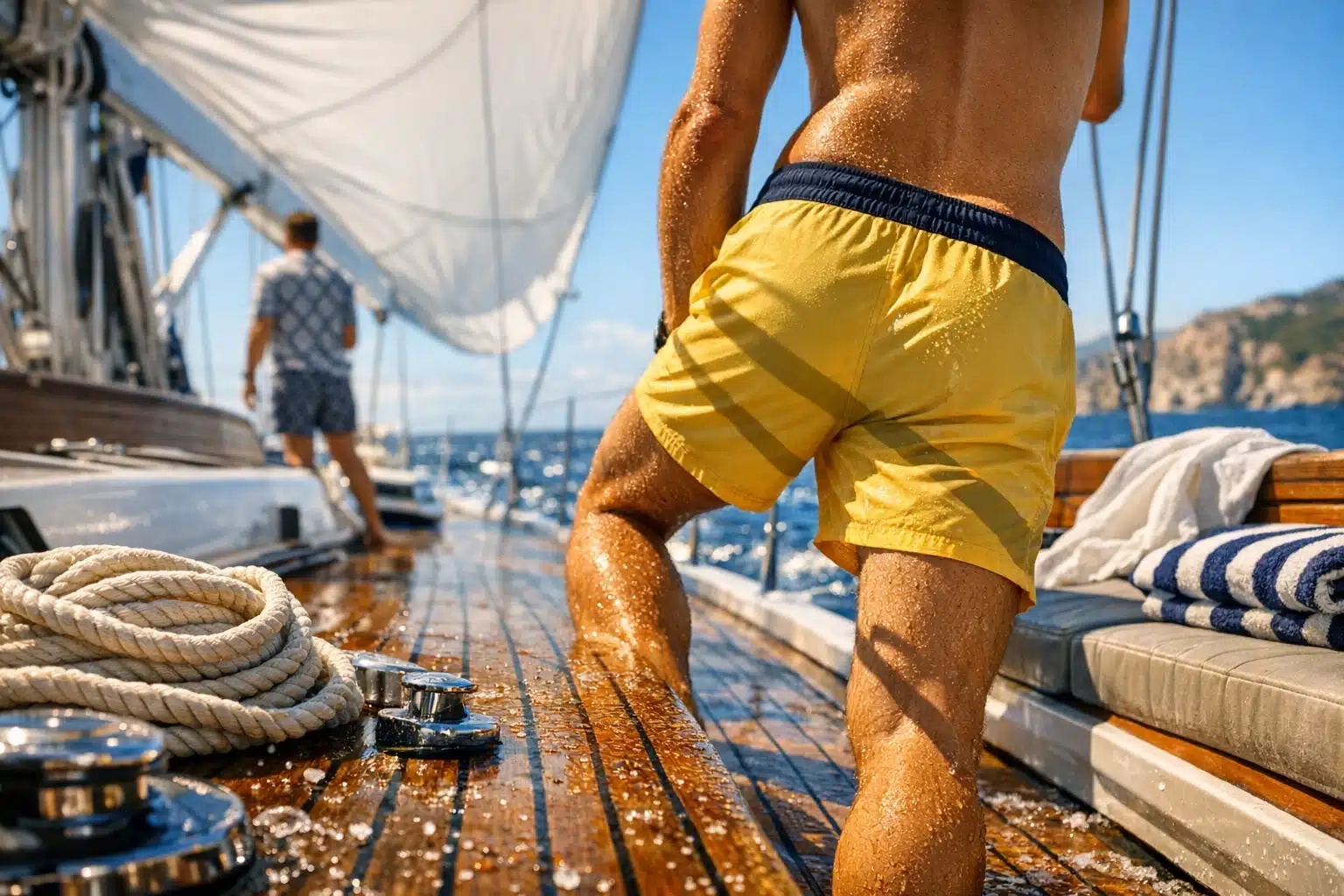
Color trends in men’s swimwear for 2026 are moving in two lively directions at once: refined restraint and expressive optimism. On one side, designers are leaning into grounded neutrals such as sand, clay, slate, olive, and softened navy. These shades feel mature, travel well, and pair easily with white tees, open camp shirts, or lightweight resort layers. On the other side, brighter tones are returning with more precision than chaos. Instead of random neon overload, the season favors intentional pops of citrus orange, sea-glass green, cobalt, faded coral, and sunlit yellow used in cleaner, more thoughtful ways.
Patterns are becoming more sophisticated too. Tropical prints have not disappeared, but they are being reworked into smaller motifs, tonal leaves, abstract palms, and watercolor-inspired surfaces rather than loud novelty graphics. Stripes are particularly strong for 2026, especially vertical or slightly irregular stripe layouts that elongate the frame. Geometric designs are also gaining traction, from soft retro checks to tile-inspired repeats that feel modern without becoming sterile.
One of the most useful style rules is to think about distance. A print that seems busy up close can look balanced from a few steps away, which is how most people will actually see it. This is why medium-scale patterns are often the safest choice. They add interest without overwhelming the wearer. Color blocking is another practical trend because it creates structure. A darker waistband, side panel, or hem detail can subtly sharpen the silhouette.
Men choosing colors should consider skin tone, destination, and how the suit will be used:
- Fairer complexions often work well with marine blues, greens, and richer earth tones.
- Medium and olive skin tones can carry both dusty neutrals and brighter citrus accents.
- Deeper skin tones are often complemented beautifully by saturated jewel colors and crisp whites.
- For frequent wear, muted tones usually feel more timeless than novelty prints.
Explore 2026 men’s swimwear trends with insights on fit, fabrics, colors, and confidence‑boosting styles designed for comfort and modern appeal.
The broader mood of 2026 is not about dressing louder for the sake of attention. It is about choosing a visual identity that feels current, relaxed, and believable. Imagine the effect of slate blue fabric against bright water, or a fine rust stripe warming up under evening sun. The strongest choices are the ones that look effortless, as though the wearer did not chase the trend but simply arrived in step with it.
Modern Swimwear Fabrics Focus on Dry Time, Stretch, Durability, and Skin Comfort
Fabric has become one of the most important differentiators in modern swimwear, and for good reason. Today’s buyers expect more than water resistance. They want material that dries quickly, stays light, resists fading, and remains comfortable during long wear. That demand has pushed brands toward better fiber blends and more specialized finishes. The result is swimwear that feels less like a compromise and more like performance apparel shaped for leisure.
Most modern swimwear still relies on synthetic fibers, particularly polyester, nylon, and elastane. Each plays a different role. Polyester is valued for durability, color retention, and chlorine resistance, which makes it useful for frequent pool use. Nylon tends to feel smoother and softer against the skin, often giving trunks a more premium hand feel. Elastane, usually added in smaller percentages, provides stretch and helps the garment recover its shape after movement. Many high-performing swim shorts now use blends that balance these strengths rather than relying on a single fiber type.
Comfort features are becoming more technical in subtle ways. Four-way stretch fabrics improve mobility in and out of the water. Laser-cut drainage eyelets reduce ballooning in the pockets. Flatlock or bonded seams can reduce chafing. Some suits use brushed waistbands or softer internal facing to prevent rubbing during long wear. Quick-dry treatments matter as well, especially for travelers who want to move from water to lunch without sitting in a damp suit for an hour. While drying speed varies by weave and climate, lighter microfiber constructions generally dry faster than heavier traditional shells.
UPF-rated swim fabrics are another worthwhile consideration. A UPF 50 fabric is commonly rated to block about 98 percent of ultraviolet radiation, though no clothing replaces broader sun protection habits. Chlorine resistance also deserves attention, particularly for men who swim regularly in pools. Fabrics that include PBT or chlorine-resistant polyester blends can hold shape better over time than basic fashion-first materials.
Useful fabric and comfort checkpoints include:
- Quick-dry construction for travel, resort wear, and repeated daily use
- Stretch recovery so the suit does not become baggy after swimming
- Soft inner lining to reduce friction during walking or sports
- Colorfast fabric for exposure to sun, salt, and chlorinated water
- Recycled fibers for shoppers who want lower-impact material choices
Sustainability also continues to influence design. Recycled polyester and regenerated nylon are now common in premium and mid-range ranges alike. These materials do not automatically guarantee better quality, but they do show how the category is evolving. The best modern swimwear fabric is therefore not the most technical on paper; it is the blend that quietly supports the wearer through heat, movement, water, and repeated use without losing comfort halfway through the day.
How to Shop Smarter, Build Confidence, and Choose Swimwear You Will Actually Wear
Even with trend awareness and fabric knowledge, the final test is simple: will the swimwear be worn often and with ease? Many men own at least one pair that seemed promising in the store but now lives untouched in a drawer. That usually happens when the purchase was based on impulse rather than context. A stronger approach is to build a small rotation around real-life needs. For some, that means one tailored trunk for holidays, one athletic option for regular swimming, and one casual pair that works for beach days and spontaneous summer plans.
Shopping online requires a bit more discipline. Start with the size chart instead of your assumption. Waist measurements vary across brands, and rise or cut can change how a size feels. Read product descriptions for lining type, inseam, and fabric composition rather than relying only on images. Customer reviews can be useful when they mention specifics such as whether the leg opening runs narrow, the material feels heavy when wet, or the waistband stretches out after use. These details are more valuable than vague praise.
Before buying, it helps to ask a few practical questions:
- Will this work mainly for swimming, mainly for lounging, or both?
- Can I wear it comfortably for several hours, not just a quick dip?
- Does the color still feel appealing beyond a single season?
- Will the fabric suit salt water, pool chlorine, or frequent travel?
- Does the cut feel like me, or am I forcing a trend that does not fit my habits?
Care also shapes long-term value. Rinsing swimwear after salt or chlorine exposure can help preserve elasticity and color. Harsh heat from dryers can shorten the life of stretch fibers, so air drying is usually the safer route. Rotating between two or more pairs can also reduce wear, especially during holidays when one suit barely has time to dry before the next swim.
For the target audience of 2026 men’s swimwear, the smartest choice is rarely the flashiest one. It is the pair that matches your body, your plans, and your comfort threshold while still feeling current. Confidence on the beach or by the pool does not come from copying someone else’s look. It comes from wearing a suit that fits cleanly, performs well, and supports the version of style you can carry naturally. When those pieces come together, trend awareness becomes useful rather than stressful, and swimwear turns from a seasonal gamble into a reliable part of a modern wardrobe.