 Artificially generated image
 Confidence You Can See: Hot Men’s Swimwear Trends 2026
Introduction and Article Outline
Swimwear has a strange kind of power: when the fit is right, you stop tugging at the waistband and start paying attention to the day ahead. A good pair should handle sun, salt, movement, and long hours without turning comfort into compromise. That is why this guide begins with a clear outline—fit, color, fabric, and confidence—before unpacking each point in practical detail. Read on with your next holiday, pool session, or resort weekend in mind.
Men’s swimwear has changed noticeably over the last decade. What used to be a narrow choice between long board shorts and basic trunks has turned into a category shaped by tailoring, technical fabrics, refined color palettes, and better support features. That shift matters because swimwear now has to perform in more than one setting. A pair of trunks may go from an early swim to lunch on a terrace, then on to an afternoon walk along the marina. In other words, style and utility are no longer separate conversations.
Before diving into the details, here is the structure of the article:
- How fit affects comfort, proportion, and confidence
- What colors and patterns are likely to define 2026
- Which modern fabrics and construction details improve wearability
- How to balance trend awareness with personal taste
- A practical conclusion for men who want to shop smarter
Choosing swimwear well is partly about aesthetics, but it is also about physics and practicality. Water changes the weight of fabric. Sun exposes design flaws. Movement reveals whether a leg opening is too narrow, whether the lining chafes, and whether the waistband stays stable when wet. Those are small issues until they become the only things you notice all day.
Fashion also moves in cycles, and 2026 looks set to reward versatility. Many brands are leaning toward cleaner shapes, slightly more tailored proportions, and fabrics that feel softer and less plasticky than older synthetic blends. Color stories are broadening too, making room for muted resort tones as well as playful pattern work. For readers who want swimwear that feels current without chasing every passing fad, this is a useful moment to understand what truly matters and what can safely be ignored.
How to Choose the Right Swimwear Fit
The best swimwear fit begins with purpose. Ask a simple question first: where will you wear it most often? A man who swims laps, plays beach volleyball, and dives frequently will need more security and less excess fabric than someone buying trunks mainly for holidays and poolside lounging. Once that purpose is clear, the next step is proportion. Fit in swimwear is not only about size; it is about how length, leg opening, waistband structure, and fabric weight work together on your frame.
For most men, mid-length swim trunks are the easiest and most flattering option. An inseam of around 5 to 7 inches often creates a balanced line because it shows enough leg to avoid a heavy silhouette while still offering coverage. Shorter inseams can look sharper and more fashion-forward, especially on leaner or athletic builds, but they also draw more attention to the thigh. Longer styles, such as 8 to 9 inches, can work well on taller men, yet they sometimes visually shorten the leg if the cut is too wide or stiff.
Here are several fit checkpoints worth using in a changing room or at home:
- The waistband should feel secure without digging into the skin
- The leg opening should sit cleanly, not flare out like a bell
- The seat should follow the body without pulling tight across the back
- The rise should allow movement without sagging when wet
- The lining should support, not scratch or bunch
Body shape matters, but it should guide rather than limit your choice. Men with broader hips may prefer trunks with a straighter leg and darker solid colors, since these create a cleaner outline. Men with slimmer frames often carry prints and shorter lengths especially well because the extra visual interest adds presence. Athletic builds usually suit tailored trunks with a trim seat and controlled stretch, while fuller builds tend to benefit from structured waistbands and fabrics that hold shape rather than cling.
It is also smart to pay attention to what happens after the swim. Some trunks look perfect dry and become awkward in motion once wet. A heavier fabric may droop, and a weak waistband may start slipping. If possible, mimic movement before buying: squat, sit, bend, and walk. Beach daylight is honest, and swimwear never hides poor construction for long.
Most importantly, fit should support confidence instead of demanding self-consciousness. If you are constantly adjusting the hem, covering your midsection, or worrying about transparency, the design is not serving you well. Good swimwear lets you forget about itself. That, more than any label or trend, is the real sign that the fit is right.
Trending Colors and Patterns for 2026
Color trends in men’s swimwear for 2026 are moving in two directions at once, and that is part of what makes the season interesting. On one side, there is a strong pull toward relaxed, sun-washed shades inspired by coastlines, stone, sea glass, and faded resort architecture. On the other, there is growing confidence in expressive color blocks and smarter statement prints. The result is not chaos but range. Men will have more room to choose between calm sophistication and playful energy without feeling out of step.
The softer palette is likely to include dusty teal, mineral blue, clay, sand, olive, muted coral, and softened citrus tones. These colors photograph well, pair easily with linen shirts or lightweight polos, and tend to flatter different skin tones because they are less harsh than neon brights. Deep navy and black will remain dependable staples, but they are increasingly joined by richer alternatives such as espresso brown, storm green, and slate blue. Those shades feel modern because they offer depth without shouting for attention.
Print trends are also evolving. In 2026, the most wearable patterns will probably avoid the overly busy, high-contrast tropical motifs that once dominated resort racks. Instead, expect more considered designs such as:
- Tonal botanical prints that blend into the base color
- Vintage-inspired cabana stripes
- Micro-geometrics that read as texture from a distance
- Watercolor-style florals with softened edges
- Retro postcard graphics used sparingly rather than all over
Choosing between solid colors and patterns comes down to how much visual structure you want. Solid trunks are versatile and often feel more polished, especially if you plan to wear them beyond the pool. Patterns can be excellent for adding personality, but scale is crucial. Large prints create a bold impression and can widen the frame visually, while smaller motifs tend to feel neater and easier to style. Vertical stripes or narrow side details may even help elongate the body, which is useful for shorter or stockier builds.
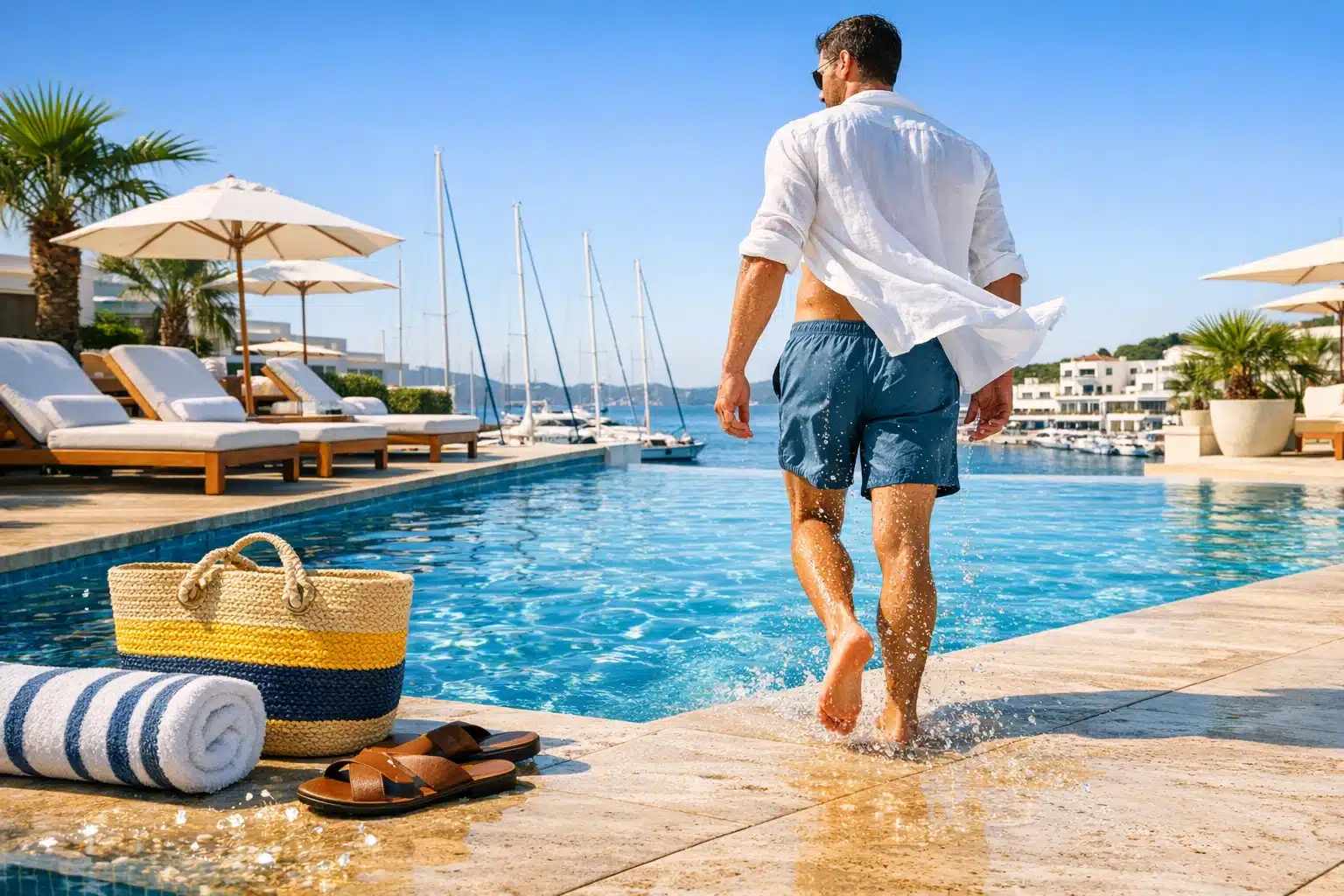
There is also a noticeable move toward coordinated styling. Men are increasingly choosing swimwear that works with the rest of a summer wardrobe rather than treating it as a separate category. That means considering how trunks pair with sandals, overshirts, lightweight knitwear, sunglasses, and even tote bags. A good trunk color does not live alone; it becomes part of an entire warm-weather uniform.
Explore 2026 men’s swimwear trends with insights on fit, fabrics, colors, and confidence‑boosting styles designed for comfort and modern appeal.
The most useful trend advice is simple: pick one element to carry the mood. If the print is lively, keep the silhouette clean. If the color is bold, avoid extra visual clutter. When trend and restraint meet in the middle, swimwear looks contemporary rather than costume-like.
Fabric and Comfort Features in Modern Swimwear
If fit decides whether swimwear looks right, fabric decides whether it feels right after an hour, a day, or an entire trip. Modern men’s swimwear has improved dramatically because brands now pay closer attention to stretch behavior, drying speed, lining comfort, and sustainable fiber choices. The old model of stiff synthetic shorts with scratchy netting is slowly fading. In its place is a more thoughtful approach that borrows from sportswear, outdoor apparel, and contemporary tailoring.
The most common base fabrics today are polyester, nylon, and blends with elastane. Each brings different strengths. Polyester is durable, colorfast, and often more resistant to chlorine, which makes it practical for regular pool use. Nylon generally feels smoother and softer against the skin, giving many premium trunks a more refined hand feel. Elastane adds flexibility, especially important for swimmers who sit, stretch, or move frequently between water and land. Four-way stretch fabrics have become especially popular because they allow movement in multiple directions rather than only across the width of the garment.
Comfort features worth noticing include:
- Quick-dry finishes that reduce the heavy, clingy feel after swimming
- Compression or boxer-style liners as alternatives to traditional mesh
- Laser-cut drainage holes in pockets to prevent water buildup
- Flatlock or bonded seams that reduce rubbing
- UPF-rated materials, with UPF 50+ blocking about 98% of UV radiation
- Recycled fibers that lower reliance on virgin synthetic materials
Lining deserves special attention because it can make or break a pair of trunks. Traditional mesh still works for some men, particularly when it is soft and finely woven, but many buyers now prefer supportive inner shorts or brief-style panels. These reduce chafing, improve coverage, and often feel more secure during longer wear. If you have ever left the beach with irritated skin, the liner was probably part of the story.
Waist construction is another overlooked detail. A fully elastic waistband with a drawstring is forgiving and easy to wear, while a hybrid waistband—with elastic at the back and a flatter front—offers a cleaner, more tailored appearance. Zippered back pockets, hidden phone sleeves, and anti-odor finishes can also be useful, though they matter most if they do not add bulk.
From a sustainability perspective, many modern trunks now use recycled polyester made from post-consumer plastic or reclaimed waste streams. That does not automatically guarantee better quality, but it does show how the market is adapting to environmental expectations. As with any garment, the best sign of quality is still performance over time: stable color, strong seams, shape retention, and comfort that lasts longer than the first sunny weekend.
Conclusion: Building a Swimwear Wardrobe with Confidence
For most men, the smartest way to shop for swimwear in 2026 is not to chase every trend but to build from a few reliable principles. Start with fit, because no color or fabric innovation can rescue a silhouette that feels awkward on your body. Then consider how and where you actually wear swimwear. If your summer is mostly hotel pools and beach clubs, a tailored mid-length trunk in a sophisticated color may do almost everything you need. If your days are more active, technical stretch fabric, secure lining, and a sturdy waistband become more important than visual flair.
A practical approach is to think in tiers rather than one perfect pair. Many men benefit from owning:
- One versatile solid trunk in navy, olive, charcoal, or sand
- One patterned option for holidays or more expressive styling
- One sport-focused pair designed for movement and repeated swimming
This small rotation covers different settings without overbuying. It also helps you experiment with trend-led colors or prints while keeping a dependable foundation in the wardrobe. If 2026’s softer palettes appeal to you, try them first in a classic silhouette. If you are curious about statement patterns, choose one with a controlled scale and let the rest of the outfit stay simple.
Confidence is often discussed as if it appears magically, but clothing plays a real role. The right swimwear supports posture, reduces distraction, and makes a man feel prepared rather than exposed. That matters because beaches and pools are environments where comfort shows immediately. People notice when someone looks at ease, and ease usually comes from practical decisions made earlier: the correct length, the right liner, the right fabric weight, the right color for the setting.
So, for the reader standing between trend reports and fitting-room uncertainty, the message is reassuring. You do not need to reinvent your style to look current in 2026. Choose a fit that respects your proportions, a palette that complements your wardrobe, and fabric features that improve real-world wear. When those elements come together, swimwear stops being a seasonal afterthought and becomes what it should be: functional, flattering, and easy to trust.