Hot Men’s Swimwear Trends 2026: Confidence You Can See
Swimwear has become a style category rather than an afterthought, especially as men look for pieces that can move from pool deck to lunch stop without feeling out of place. In 2026, design is more intentional, fabrics are more technical, and fit matters more than oversized logos. This article breaks down the cuts, colors, materials, and practical choices shaping the season. If you want trunks that feel current without looking forced, this is a smart place to begin.
Article Outline
- The shift toward cleaner silhouettes and how inseam length changes the overall look.
- The rise of performance fabrics, quick-dry construction, and comfort-focused design.
- The colors, prints, and styling details making modern swimwear feel more personal.
- How different settings, from lap pools to resort beaches, influence the best swimwear choice.
- What men should prioritize when buying swimwear in 2026, including fit, function, and long-term value.
1. Cleaner Fits Are Replacing Bulkier Shapes
The most visible change in men’s swimwear for 2026 is the move away from excess. Shorts are not disappearing, but oversized cuts, stiff board-short silhouettes, and overly loud branding are no longer dominating the conversation. Instead, men are choosing streamlined trunks that look considered without feeling precious. The effect is subtle but powerful: a shorter, better-balanced trunk can change posture, improve comfort, and make the rest of a summer outfit look far more polished.
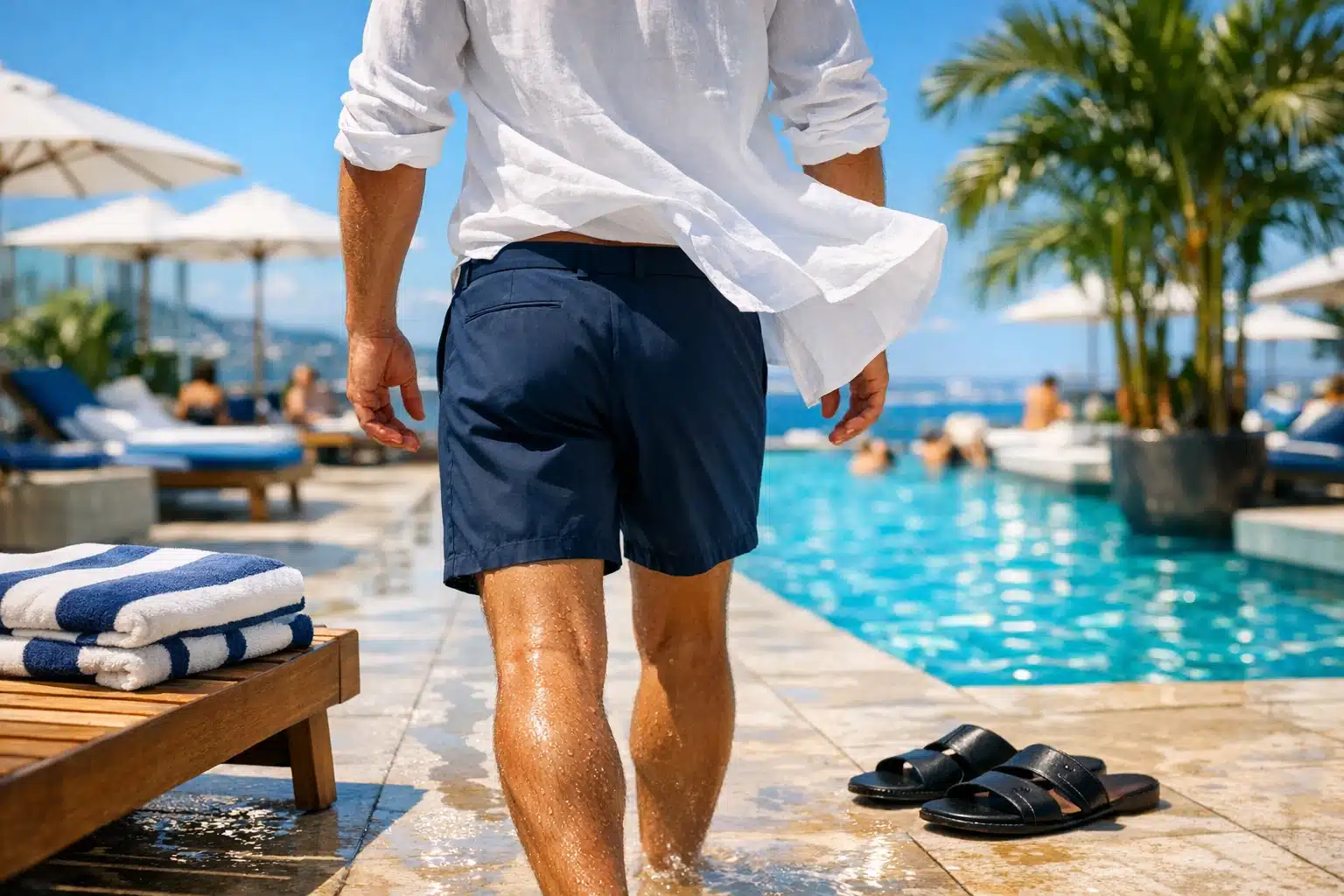
Men’s swimwear in 2026 is leaning toward cleaner fits, smarter materials, and stronger personal style.
That trend shows up most clearly in inseam length. Many men are gravitating toward trunks in the 4-inch to 6-inch range, which tends to flatter a wide range of builds. A 7-inch inseam still works well for those who want a bit more coverage, especially for taller men or anyone easing into shorter swimwear. What is fading is the habit of choosing the longest possible short by default. The new approach is less about covering up and more about wearing something proportionate.
Why does this matter so much? Because fit now carries the style message that logos used to carry. A clean waistband, a smoother leg opening, and a trim seat create a look that feels modern even in a simple solid color. Swim trunks are increasingly being treated like tailored casualwear for the beach rather than purely functional gear. That shift also explains why hybrid designs are growing in popularity. A well-cut trunk can pair naturally with:
- a linen shirt left open over a tee
- a knitted polo for a resort setting
- a plain camp-collar shirt and leather sandals
- a lightweight overshirt for evening by the water
There is also more room now for different body types to find a confident fit. Athletic men often prefer tapered trunks with a secure waistband, while broader builds can benefit from a straighter leg that does not cling. Slim men may look stronger in structured mid-length styles rather than extra-short options. In other words, the trend is not about copying one body ideal. It is about using proportion intelligently.
The old beach uniform often felt borrowed from surf culture, even for men who never touched a board. In 2026, the mood is different. Swimwear is becoming more urban, more edited, and more wearable beyond the sand. That makes cleaner fits one of the defining trends of the year, and likely one with lasting influence well past a single season.
2. Smarter Fabrics Are Driving Comfort, Performance, and Durability
If silhouette is the first thing people notice, fabric is what determines whether a pair of trunks actually earns repeat wear. One reason swimwear is improving in 2026 is that materials are doing more than ever. Men increasingly expect swim shorts to dry faster, feel softer, stretch more naturally, and resist the wear that comes from sun, chlorine, salt, and repeated washing. As a result, construction quality has become a bigger part of the buying decision.
Traditional nylon still has a place because it is lightweight and dries relatively quickly, but modern blends are more refined. Many newer trunks combine recycled polyester, nylon, and elastane to create a balance of structure and mobility. The best options do not feel rubbery or plasticky. They feel light, flexible, and smooth against the skin. Four-way stretch fabrics, once mainly associated with athletic shorts, are now common in lifestyle swimwear as well.
Another important shift is lining. Men have long tolerated mesh interiors that scratch, bunch, or sag after several wears. In 2026, better lining systems are a real selling point. Supportive compression-style liners, softer micro-mesh panels, and reduced-seam interiors are designed to improve movement and minimize irritation. These details may sound small, but they have a huge effect on comfort during a full day that includes swimming, walking, sitting, and drying off in the sun.
Useful fabric features now often include:
- quick-dry finishes that reduce damp cling after swimming
- UV-protective textiles in some higher-performance models
- chlorine resistance for frequent pool users
- lightweight weaves that avoid the heavy, waterlogged feel of older trunks
- recycled fibers for buyers who want lower-impact material choices
There is also a growing distinction between purely technical swimwear and hybrid lifestyle swimwear. Competitive swim briefs, jammers, and training shorts remain specialized categories, but many modern trunks are built to bridge multiple uses. A man heading from a hotel pool to a casual outdoor lunch may want something that does not scream “sportswear.” That is where smarter fabrics shine. They allow a trunk to hold its shape and appearance even when worn as part of a broader summer outfit.
Quality matters here, because cheap fabric often reveals itself quickly. It may fade under strong sunlight, lose elasticity, or dry unevenly. A better-made pair usually survives more than one season and maintains color and structure for far longer. In practical terms, that means the 2026 consumer is not only shopping for style. He is shopping for friction-free wear, comfort under real conditions, and materials that perform without making a visual fuss. Good swimwear today works quietly, and that quiet competence is part of its appeal.
3. Color, Print, and Detail Are Becoming More Personal
While fit is getting cleaner, swimwear is not becoming boring. In fact, 2026 looks especially interesting because color and detail are being used with more control. Instead of relying on aggressive neon shades or oversized tropical graphics, many designs now aim for a more curated kind of personality. The beach still welcomes playfulness, but the expression is more refined. Think richer tones, smaller-scale patterns, textured fabrics, and thoughtful finishing rather than visual noise.
Solid colors remain a strong foundation, especially shades that feel elevated without becoming formal. Deep navy, olive, rust, chocolate, slate blue, stone, and muted teal are particularly versatile because they work across skin tones and pair easily with shirts, slides, and summer accessories. These colors also photograph well, which matters more than brands may openly admit in an era shaped by travel content, personal style posts, and casual social media sharing.
Prints are evolving too. Loud all-over motifs still exist, but more men are choosing patterns that add interest without taking over the entire look. Vertical stripes, abstract micro-prints, retro geometrics, faded botanicals, and surf-inspired graphics in restrained palettes are more common than chaotic novelty prints. The goal is not to become invisible. It is to look intentional.
Small details are doing a lot of work this year, including:
- contrast drawcords that add a subtle accent
- matte hardware instead of shiny eyelets
- tonal embroidery placed discreetly near the hem
- scalloped side seams or curved hems for easier movement
- textured fabric surfaces that add depth even in plain colors
This more personal direction also means men are styling swimwear in ways that reflect their broader wardrobe. A minimalist dresser may reach for a cream-and-black stripe or a dark olive trunk with no visible branding. Someone with a vintage leaning may choose washed red, faded turquoise, or a geometric print that nods to 1970s pool culture. A sportier dresser may prefer contrast piping, zip pockets, and technical finishes. None of these choices feel out of place, because 2026 swimwear allows for more than one aesthetic lane.
There is a nice creative tension here. Swimwear still signals relaxation, sun, and movement, but it now borrows from ready-to-wear fashion with greater confidence. The result feels like a summer wardrobe with sharper editing. Even the smallest details can change the mood. A plain black trunk with a textured weave and neat side vents may look cooler than a much louder print. Sometimes style speaks in a whisper, and that quiet note carries farther than a shout across the sand.
4. The Best Swimwear Now Depends on Where and How You Wear It
One of the biggest reasons swimwear trends feel more diverse in 2026 is that men are no longer shopping for a single all-purpose pair. Instead, they are thinking in scenarios. The right trunk for a lap pool is not necessarily the right choice for a resort afternoon, a beach volleyball game, or a long coastal walk with stops for food and drinks. This shift toward situational dressing is making men more selective, and ultimately more satisfied with what they buy.
For dedicated swimming or regular training, streamlined performance styles remain essential. Men who spend serious time in the water usually benefit from designs with secure waistbands, compressive support, chlorine-resistant fabric, and minimal drag. In that context, practicality matters far more than trend appeal. Clean lines still look good, but the main goal is efficiency and endurance.
At the other end of the spectrum is resort or leisure swimwear, which often prioritizes versatility. Here, style matters because the garment may be worn for hours outside the water. A mid-length trunk in a tailored cut, paired with a linen button-up or soft polo, feels right at home in a beach club, hotel terrace, or waterfront restaurant. Zip pockets, quick-dry fabric, and soft lining become especially useful when the day keeps changing shape.
For different settings, useful guidelines include:
- Pool training: choose secure construction, chlorine resistance, and low-bulk design.
- Beach days: prioritize comfort, pocket function, and fabric that handles sand and sun well.
- Resort wear: look for refined colors, cleaner seams, and trunks that work with a shirt and sandals.
- Active summer trips: consider hybrid shorts that move easily between swimming and walking.
- Surf-oriented use: seek stronger waist security and cuts that stay stable in motion.
This scenario-based mindset also helps explain why modern swimwear brands are offering broader ranges. One man may own a technical pair for swimming laps, a polished pair for travel, and a more playful printed pair for relaxed social weekends. That is not excess; it is simply more realistic than expecting one trunk to handle every situation equally well.
There is a freedom in choosing swimwear based on real life rather than a fantasy version of summer. Not every day involves a perfect beach and a cinematic sunset. Sometimes it involves carrying a bag through a crowded city, drying off on a balcony chair, or grabbing coffee after a quick dip. The strongest swimwear trends of 2026 understand that modern summer style lives in motion. The best pair is the one that suits the moment, supports the body, and still looks good when the day goes off script.
5. Final Take: How to Choose Swimwear That Looks Current and Feels Right
For men trying to make sense of 2026 swimwear trends, the smartest approach is not to chase every new idea. It is to identify what genuinely improves fit, comfort, and confidence. Trends are useful when they sharpen your choices, not when they pressure you into buying something that feels unnatural. The good news is that this season’s strongest directions are practical. Cleaner cuts, better materials, and more considered colors are easier to live with than short-lived novelty.
Start with fit before anything else. A flattering inseam, a comfortable waistband, and a leg opening that sits cleanly will do more for your look than any bold print. After that, focus on function. If you mostly swim in pools, fabric performance matters. If you travel often, versatility matters. If your beachwear also has to work for lunch, sightseeing, or casual social settings, choose trunks that can blend into a wider summer wardrobe.
A useful buying checklist for 2026 looks like this:
- Pick an inseam that suits your height and comfort level rather than following a rule blindly.
- Check fabric content for stretch, drying speed, and durability.
- Pay attention to lining quality, because comfort starts there.
- Choose colors that pair with what you already wear in warm weather.
- Consider whether the trunk works only in water or also as part of a casual outfit.
- Buy for real usage patterns, not just vacation fantasies.
Men who build a small but thoughtful swimwear rotation often get the best results. One versatile solid pair, one slightly more expressive option, and one performance-focused choice can cover most summer situations without clutter. That kind of wardrobe feels modern because it is edited. It gives you options without turning every beach day into a style puzzle.
For the target audience here, men who want to look good without overthinking it, the key message is simple. Swimwear in 2026 rewards self-awareness. You do not need the loudest trunk on the beach, and you do not need to copy a runway mood literally. You need something that fits well, handles water and heat comfortably, and aligns with your personal style. When those three pieces come together, confidence stops looking like an effort. It just looks like you arrived prepared for summer, and prepared well.