 Artificially generated image
 Hot Men’s Swimwear Trends 2026: Confidence You Can Feel
The swimwear conversation for 2026 is less about chasing flashy novelty and more about wearing pieces that feel good the second they hit the skin. Designers and mainstream labels alike are refining cuts, upgrading fabrics, and making style choices that suit travel, sport, and relaxed beach days. That matters because men are buying fewer throwaway items and expecting more versatility from every pair. Knowing the major shifts now makes it easier to choose swimwear that looks current, fits well, and earns repeat use all season.
Outline
- How silhouettes are changing, from shorter inseams to cleaner tailoring
- Which colors, prints, and textures are shaping the 2026 look
- Why fabric technology and sustainability matter more than ever
- How to match swimwear trends to body type, activity, and personal style
- What men should actually buy for summer 2026, with a practical conclusion
1. Silhouettes Are Sharper, Shorter, and More Considered
The biggest visual shift in men’s swimwear for 2026 is proportion. For years, oversized board shorts held on as the default option, especially for men who wanted coverage or simply followed habit. That is changing. The modern beach uniform no longer billows like a spare sail in the sea breeze. Instead, it looks more intentional. Shorter trunks, neater leg openings, and trimmer lines are leading the market because they feel lighter, photograph better, and move more naturally between swimming, walking, and casual resort wear.
The most versatile inseam for 2026 sits in the 5-inch to 7-inch range. A 5-inch trunk often feels energetic and athletic without crossing into costume territory, while a 7-inch version offers a little more coverage and works well for men who prefer a balanced, easy fit. Longer 8-inch to 9-inch options still have a place, particularly for surfing, outdoor activity, or men who simply like a classic board-short feel, but they are being redesigned with cleaner waistbands and less excess fabric.
Another clear trend is the rise of tailored swim shorts. These styles borrow ideas from everyday shorts: flatter fronts, better drape, hidden zip pockets, and waistbands that look polished rather than bulky. They are ideal for men who want one pair that can go from beach chair to lunch terrace with only a shirt added. That versatility matters more now because modern travel wardrobes tend to be smaller and more functional.
There is also growing visibility for fitted options such as square-cut swim briefs and short performance trunks. They remain more niche than mid-length swim shorts, but they are becoming less intimidating because brands are presenting them as sport-driven and streamlined rather than theatrical. For lap swimming, tanning, or minimalist packing, they make practical sense.
- 4-inch to 5-inch inseam: bold, sporty, and very current
- 6-inch to 7-inch inseam: the easiest all-around choice for most men
- 8-inch and longer: better for coverage, surf use, and traditional preferences
The real takeaway is not that one cut has replaced every other option. It is that 2026 rewards men who choose proportion on purpose. Swimwear looks strongest when the length, rise, and leg opening match how the body actually moves. Confidence starts there, long before color or branding enters the picture.
2. Colors, Prints, and Textures Bring Personality Without Looking Overworked
If silhouette is the framework, color is the conversation starter. Men’s swimwear for 2026 is moving in two directions at once, and that is good news for shoppers. On one side, there is a steady rise in refined, earthy, almost architectural tones: clay, olive, mineral blue, sand, rust, and deep espresso. These shades feel grown-up, travel well, and mix easily with linen shirts, knit polos, and neutral sandals. On the other side, there is still plenty of appetite for brighter summer energy, but it is showing up in a more controlled way through citrus accents, saturated aqua, modern red, and punchy panels rather than chaotic all-over excess.
Prints are getting smarter too. Instead of relying only on loud tropical motifs, many 2026 collections are leaning toward placement graphics, softened stripes, abstract botanicals, geometric repeats, and retro references that nod to the 1970s and 1980s without feeling costume-like. That makes the swimwear easier to wear beyond a single holiday mood. A sharp vertical stripe can visually lengthen the body. A micro-print can add interest without overwhelming the frame. A panel of contrast color at the side seam can make a classic trunk feel current in seconds.
Texture is another quiet but important trend. Matte finishes are often replacing overly shiny surfaces, which gives swimwear a more premium look. Ribbed fabrics, seersucker-inspired weaves, crinkle textures, and soft brushed-touch shells are appearing more frequently because they add depth even when the color palette stays simple. In practical terms, texture can make a solid-color pair feel far more distinctive than a flat fabric ever could.
Men choosing among these trends should think about the role the swimwear will play. A resort week, a city rooftop pool, and an athletic beach holiday each invite different choices.
- Neutrals and mineral shades work well for versatility and repeat wear
- Stripes and micro-prints suit men who want visual interest without loud branding
- Textured solids are ideal for understated style with a premium edge
- Brighter tones are strongest when used as a focal point rather than everywhere at once
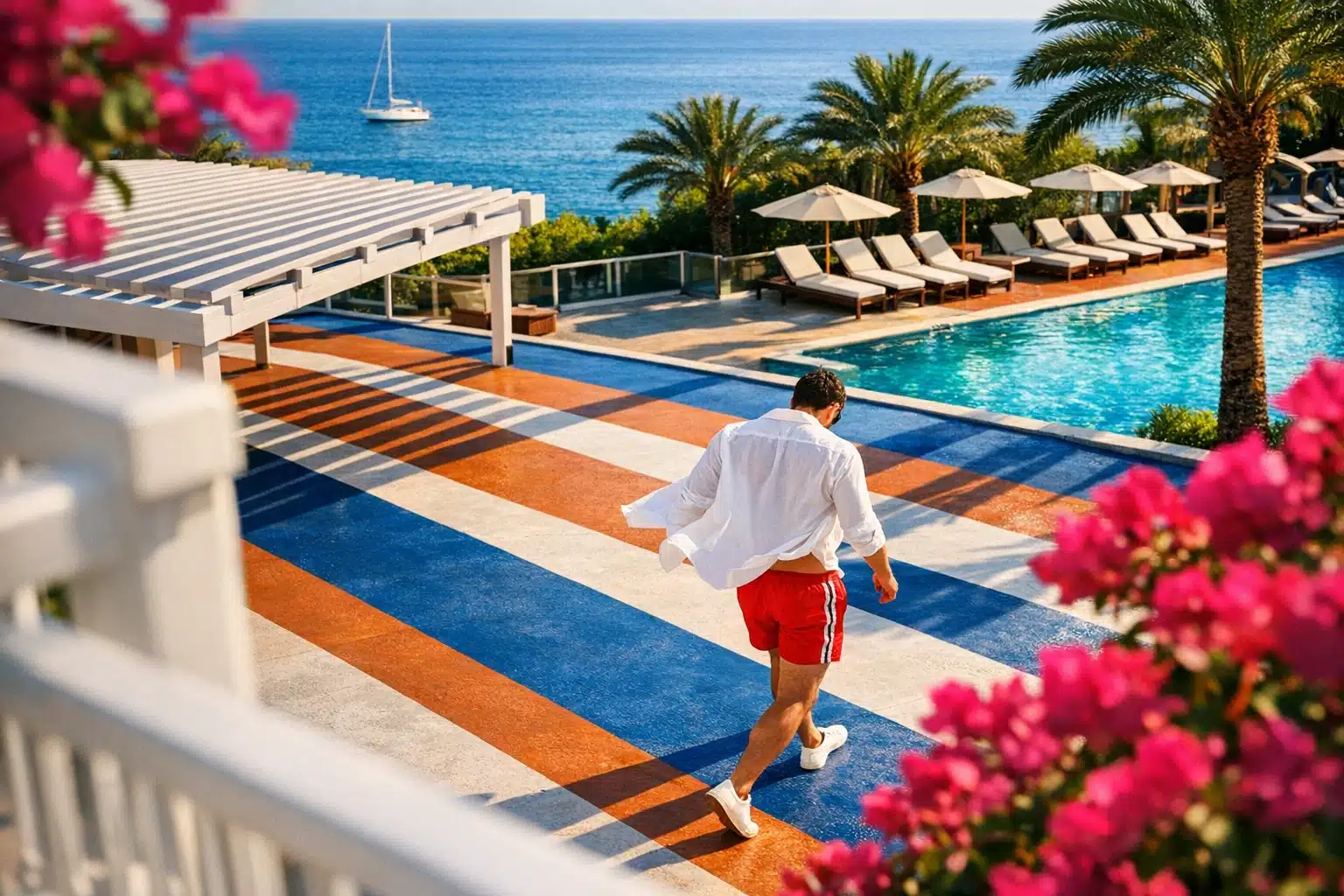
The best 2026 styles understand restraint. They know that a swimsuit can still feel expressive without shouting across the shoreline. Sometimes the most memorable pair is not the one with the biggest pattern, but the one whose color catches the afternoon light and looks exactly right with sun-warmed skin and a simple open shirt.
3. Fabric Technology and Sustainability Are No Longer Bonus Features
One of the most meaningful developments in men’s swimwear is that fabric performance is finally becoming as important as visual style. In 2026, shoppers are paying closer attention to how swimwear dries, stretches, resists wear, and handles long days that include more than just a quick swim. A good pair now needs to survive salt water, sunscreen, heat, friction, and repeated packing without losing shape. That is why material innovation is not marketing fluff when it is done well; it changes how the garment feels hour by hour.
Many strong options now use recycled polyester or recycled polyamide blends with elastane for mobility. Exact compositions vary, but a noticeable number of premium and mid-range brands are using high percentages of recycled content while maintaining a soft hand feel and reliable rebound. Four-way stretch is especially valuable for men who swim actively, play beach sports, or simply dislike stiff fabric. Quick-dry construction also matters. Lightweight shells and improved linings reduce that soggy, clingy period after leaving the water, which makes the swimwear far more comfortable during travel or casual wear.
Sun protection is another area where technical details can help. Some swim tops and certain swim shorts are made with UPF-rated fabrics, and UPF 50+ material can block roughly 98 percent of UV radiation under test conditions. That does not replace sunscreen, but it can be useful for long outdoor days. Chlorine resistance is also worth checking for frequent pool users, since it helps fabric maintain elasticity and color over time.
Sustainability, however, should not be reduced to a single label claim. A truly better purchase is usually one that lasts longer, fits well enough to be worn often, and avoids premature replacement. Durable stitching, secure hardware, stronger waistbands, and quality mesh linings may sound unglamorous, yet they are exactly what separates a dependable pair from one that spends the next summer forgotten in a drawer.
- Look for recycled nylon or recycled polyester when possible
- Check whether the fabric offers four-way stretch for comfort and movement
- Consider UPF protection if you spend long hours outdoors
- For pool use, chlorine resistance is a practical feature, not a luxury
- Pay attention to lining quality, seams, and waistband construction
The smart buyer in 2026 is asking a simple question: will this pair still feel good after ten wears, three washes, and a day that started at the beach and ended in a café? When the answer is yes, style becomes more than appearance. It becomes utility with polish.
4. The Best Trend Is the One That Suits Your Build, Your Plans, and Your Style
Trend reports are useful, but swimwear shopping still becomes personal the moment a man steps into a fitting room or clicks through size charts online. The right pair depends on body proportions, comfort level, and what the day actually looks like. A man planning lap sessions and open-water swims does not need the same thing as someone packing for a coastal city break. That seems obvious, yet many disappointing purchases happen because the trend looked good in a campaign photo and did not match real-life use.
Fit starts with length, but it does not end there. Waist rise, leg opening, print scale, and fabric structure all influence how a swimsuit looks. Men with a shorter frame often find that 5-inch to 6-inch trunks create cleaner balance than long, heavy shorts. Taller men can wear those same shorter lengths successfully, but they may also prefer 7-inch cuts for a slightly calmer proportion. Broader builds often benefit from solid colors, medium-scale patterns, and structured waistbands that sit cleanly without digging in. Slimmer frames can use texture, horizontal detailing, or brighter color to add presence. None of this is about rules carved in stone; it is about using design details to get a better result.
Use case matters just as much. Hybrid trunks with tailored styling work well for travel because they can pair with a camp-collar shirt or knit tee for lunch after a swim. More compact performance cuts are better for serious movement, especially if they include supportive lining. Resort-oriented styles can lean bolder in print or texture because they are often part of a wider outfit story.
- For active swimming: prioritize stretch, secure fit, and minimal drag
- For vacations: choose a trunk that also works with a shirt and sandals
- For poolside social settings: color and texture can do more than oversized logos
- For uncertain shoppers: start with a mid-thigh solid in a matte fabric
Styling around swimwear is easier than it used to be. A textured solid trunk can work with an open linen shirt, leather slides, and sunglasses for a relaxed polished look. A retro stripe can pair with a plain white tee and canvas sneakers while walking back from the beach. The point is that 2026 swimwear does not need to stay trapped in the water. The best pairs support the whole day, and when a man feels dressed rather than merely covered, confidence tends to follow naturally.
5. Conclusion: What Men Should Actually Buy for Summer 2026
For most men, the smartest approach to 2026 swimwear is not building a huge collection. It is choosing a small rotation that covers real needs with style and intention. If you are refreshing your summer wardrobe, start with one highly versatile pair: a mid-thigh trunk in a neutral or mineral shade, made from quick-dry fabric with reliable stretch. That pair will do the most work. It will travel easily, photograph well, and suit everything from casual beach mornings to poolside afternoons.
Next, add a second pair that serves a specific purpose. If you swim often, make it a performance-focused option with secure support, chlorine resistance, and a streamlined cut. If your summer is more social than athletic, choose something with texture, a tasteful print, or a richer color story that stands out without becoming difficult to style. A third pair is optional, but useful if you want a bolder expression of personality, such as a retro stripe, a shorter inseam, or a resort-ready pattern that feels made for long daylight and late dinners.
The strongest trends of the year all point in the same direction: better proportion, better fabric, and better decision-making. Shorter silhouettes are popular because they look intentional. Smarter colors are gaining ground because they integrate well with the rest of a warm-weather wardrobe. Technical materials matter because comfort has become non-negotiable. Sustainability matters because men are starting to value longevity over novelty. None of that requires chasing every trend. It only requires understanding what each trend offers.
- Buy for fit before hype
- Choose fabrics that suit your actual routine
- Use color and texture to express personality, not to compensate for poor fit
- Prioritize one excellent pair over several forgettable ones
If there is one idea worth keeping from all of this, it is that confidence in swimwear rarely comes from logos or extreme styling. It comes from a pair that feels right, moves well, and reflects the version of yourself you want to bring to summer. In 2026, that is the real trend: swimwear that earns its place, supports your day, and lets you show up with ease.