 Artificially generated image
 Confidence You Can See: Hot Men’s Swimwear Trends for 2026
The New Rules of Men’s Swimwear in 2026
Swimwear has become a small wardrobe category with surprisingly big consequences: the right pair can improve mobility, reduce distraction, and make a day at the pool or beach feel effortless. In 2026, design is moving beyond basic trunks toward better tailoring, smarter fabrics, and more expressive color stories. That means shoppers have more choice than ever, but also more room for confusion. This guide maps the key decisions so buying with confidence feels easier than guessing in a fitting room.
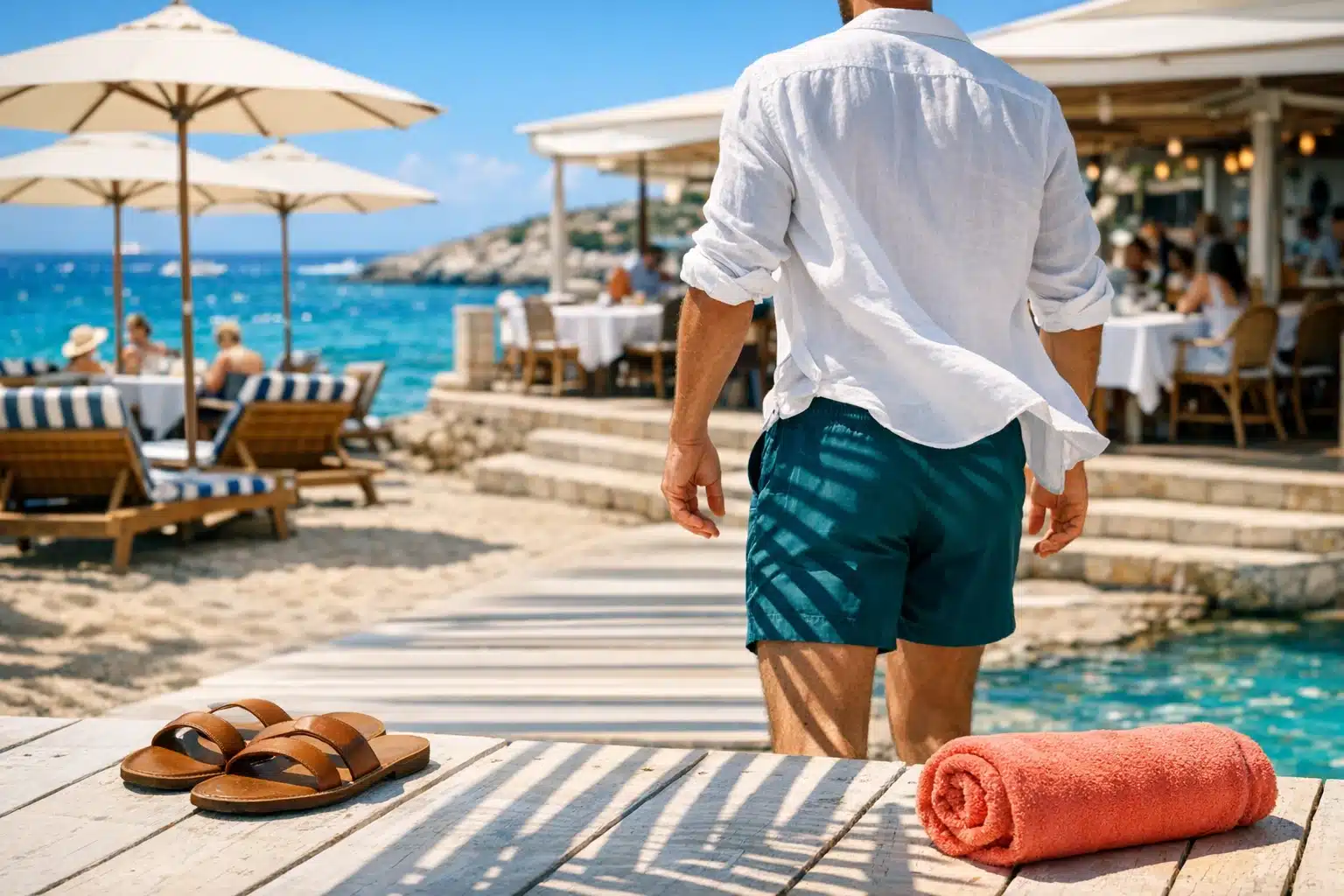
What makes this topic especially relevant now is the way men’s swimwear has shifted between fashion and function. A decade ago, many shoppers bought one pair of generic trunks and called it done. Today, people expect more. They want pieces that dry faster, sit better at the waist, flatter the leg line, and still look sharp when paired with a linen shirt or simple sandals. Swimwear is now asked to do what everyday clothing already does: fit well, reflect personal taste, and work across several settings.
This article is organized around the questions most shoppers actually ask before buying:
- How should swimwear fit through the waist, seat, and thigh?
- Which cuts work best for different heights, builds, and activities?
- What colors and prints will feel fresh in 2026 without looking overdone?
- Which fabric technologies meaningfully improve comfort, support, and durability?
Explore 2026 men’s swimwear trends with insights on fit, fabrics, colors, and confidence‑boosting styles designed for comfort and modern appeal.
That sentence captures the mood of the season quite well. The strongest swimwear trends are not just decorative. They are practical trends, tied to the way men actually move, pack, travel, exercise, and socialize. Shorter tailored trunks continue to attract attention because they offer a cleaner silhouette than oversized board shorts, while performance-inspired details such as compression liners, stretch shells, and secure pockets make modern designs more useful than older, simpler options.
There is also a subtle cultural shift behind these choices. Men are increasingly comfortable treating swimwear as part of a broader personal style rather than as a purely functional item. That does not mean everyone needs bold prints or fashion-forward cuts. It simply means the best purchase is no longer the most basic one on the rack. The best purchase is the one that matches your proportions, your habits, and your sense of ease. The sections that follow break that process down so you can judge a pair of swim trunks with more clarity and less trial-and-error.
How to Choose the Right Swimwear Fit
Fit is the first filter because even the best fabric or most fashionable color cannot rescue a pair of trunks that sits awkwardly on the body. The core areas to assess are the waistband, inseam, seat, rise, and leg opening. When these parts work together, swimwear looks intentional rather than accidental. When they do not, even expensive shorts can feel clumsy.
Start with the waistband. It should stay in place without forcing you to over-tighten the drawstring. If the waist bites into the skin when dry, it usually becomes more annoying after swimming, sitting, and walking. A good fit rests securely but does not create tension across the stomach. Elasticated waistbands with a flat front are popular for this reason: they combine visual neatness with comfort. Traditional full-elastic waists feel relaxed, while fixed waistbands can look cleaner but require more precision in sizing.
Next comes inseam length, one of the biggest visual decisions in men’s swimwear. In general:
- Short inseams, around 4 to 5 inches, create a sportier and more fashion-conscious look.
- Mid-length inseams, around 5.5 to 7 inches, offer the broadest versatility.
- Longer inseams, around 8 to 9 inches, provide more coverage but can visually shorten the legs.
For many men, the sweet spot is a trunk that ends several inches above the knee. It tends to flatter more body types, moves better in the water, and looks more current than very long cuts. That said, height and build matter. A shorter man often benefits from a slightly shorter inseam because it lengthens the visual line of the leg. A taller man can wear medium or slightly longer trunks without losing proportion.
The seat should skim rather than cling. Too much extra fabric at the back makes swimwear look baggy and heavy when wet. Too little room can make seams strain and reduce comfort. The rise also matters more than many shoppers realize. A very low rise can feel unstable when you sit down, while an overly high rise may look dated. Modern trunks generally sit just below or near the natural waist, balancing comfort and contemporary styling.
Finally, check the leg opening. If it flares widely, the shorts can resemble athletic gear from another era. If it is too narrow, movement suffers. A clean, lightly tapered leg gives most men the best result. Before buying, do a simple test: sit, squat slightly, walk a few steps, and imagine the trunk wet rather than dry. Swimwear should perform in motion, not only in the mirror.
Matching Fit to Body Shape, Activity, and Personal Style
Once basic fit principles are clear, the next step is matching a style to your proportions and lifestyle. This is where swimwear becomes less about rules and more about strategy. The goal is not to hide your body or chase a trend that does not feel natural. It is to choose a silhouette that supports the way you want to move and the way you want to feel.
Men with slimmer builds often look sharp in shorter trunks with a bit of structure because they add definition without overwhelming the frame. Clean side seams, modest tapering, and subtle prints can give the body more presence. Men with athletic builds frequently do well in mid-length trunks that accommodate stronger thighs without pulling across the leg opening. A little stretch is especially helpful here. Broader or stockier builds often benefit from trunks that sit cleanly at the waist and avoid both extremes: not too short, not too long, not too tight, not too voluminous. A tailored mid-length cut usually feels balanced.
Height also changes how swimwear reads. On shorter frames, excessive length can compress the silhouette. On taller frames, moderate length often looks composed and intentional. Pattern scale matters too. Small repeating prints are generally easier to wear on shorter men, while larger motifs can work well on taller builds because they stay in proportion with the body.
Activity should influence the choice just as strongly as appearance. Think about where the shorts will actually go:
- For lap swimming or active beach sports, prioritize streamlined cuts, secure waistbands, and stable liners.
- For resort wear or poolside lounging, a softer drape and more style-led color palette may matter more.
- For travel, quick-drying fabric and pockets with drainage become especially useful.
- For mixed-use days, choose trunks that can transition under a camp-collar shirt or lightweight knit.
Personal style is the final layer, and it often decides between two equally good options. If your wardrobe leans minimal, solid colors and restrained stripes will likely feel more authentic than loud tropical prints. If you prefer expressive dressing, this is a category where pattern can be fun without becoming impractical. Swimwear offers a rare chance to wear stronger color with relatively low commitment.
Confidence comes from coherence more than bravado. A man wearing simple navy trunks that fit perfectly often looks better than one wearing a trend-led print that feels self-conscious. The mirror test matters, but so does the movement test and the comfort test. When all three align, fit becomes invisible in the best possible way: you stop adjusting the garment and start enjoying the day.
Trending Colors and Patterns for 2026
The color direction for 2026 feels fresh because it is moving in two different but complementary directions. On one side are calm, refined tones that suggest ease and sophistication. On the other are optimistic shades and graphic patterns that bring energy without tipping into chaos. The result is a season where men can choose restraint or personality without falling behind the moment.
Among solids, deep aquatic blues remain a dependable favorite, but they are being joined by dustier ocean tones, green-leaning teal, and softened cobalt. Earth-influenced shades are also rising, especially clay, terracotta, mineral beige, and muted olive. These colors feel grounded and modern, and they pair easily with white, cream, stone, or faded denim overshirts. Lighter colors are not disappearing either. Powder blue, pale sage, washed coral, and sun-faded yellow offer a warm-weather lift that feels relaxed rather than flashy.
A notable development for 2026 is the growth of tinted neutrals. Instead of default black or basic gray, designers are leaning into espresso brown, graphite blue, and mushroom taupe. These shades give solid swimwear more depth, which is useful for men who want a versatile pair that still feels current. They also tend to look sophisticated in matte fabrics.
Patterns are becoming more selective and more polished. Rather than dense, overly busy prints, many modern options focus on cleaner visual rhythm. Expect to see:
- Retro vertical stripes and softened cabana lines
- Abstract wave patterns and water-inspired gradients
- Micro-geometrics that read as texture from a distance
- Botanical prints with reduced color palettes
- Hand-drawn motifs that feel artistic rather than novelty-driven
Why do these patterns work? Because they create interest without overpowering the body. Vertical or slightly elongated stripe placements can also help the leg look longer. Smaller prints often feel easier to wear in public settings beyond the beach, especially when paired with a plain shirt. Larger tropical motifs still have a place, but in 2026 they tend to look more modern when the palette is limited and the artwork has a cleaner, less cartoonish edge.
Choosing the right color is partly aesthetic and partly practical. Darker tones usually hide wear better and feel more versatile for travel. Lighter or brighter shades stand out in photographs and can flatter sun-touched skin. If you are uncertain, the smartest route is often one solid pair in a tinted neutral and one patterned pair in a controlled palette. That gives you range without cluttering your wardrobe. Trends are useful, but the most successful color choice is one that feels believable on you, in your usual surroundings, and with the rest of your summer clothing.
Fabric, Comfort Features, and Final Advice for 2026 Buyers
Fabric is where modern swimwear quietly earns its price. Two pairs of trunks may look similar on a hanger, yet feel entirely different after a swim, a long walk, or an afternoon in strong sun. The main fibers still dominate for good reason: polyester is valued for durability and color retention, nylon for smoothness and a slightly more luxurious hand feel, and elastane for stretch. Many quality swim shorts now use blends that combine these strengths, often pairing a resilient outer shell with a supportive inner construction.
Quick-dry performance is one of the most noticeable upgrades in current swimwear. Older fabrics could stay damp for far too long, creating discomfort and friction. Newer weaves and finishes help water release faster, which improves comfort when moving from sea to street. Recycled polyester is also more common than it used to be, reflecting a broader shift toward materials with lower environmental impact. That does not guarantee better quality on its own, but it has become a meaningful feature for shoppers who care about both performance and sourcing.
Lining deserves close attention because it changes the entire wearing experience. Traditional loose mesh linings are still common, but many men now prefer softer mesh or compression-style liners. A good compression liner can reduce chafing, improve support, and make the trunk feel more stable during activity. Seams matter too. Flat seams, bonded hems, and smoother waistband finishes help minimize irritation, especially when sand, salt, and heat are part of the equation.
Useful comfort features in 2026 often include:
- Four-way stretch for easier movement
- UPF-rated fabric for added sun protection
- Laser-cut or mesh-lined pockets that drain efficiently
- Zippered back pockets for travel practicality
- Odor-control or antimicrobial treatments in select premium styles
- Lightweight hardware that does not feel bulky when wet
Even small details can have a big effect. A heavy metal eyelet, rough inner seam, or poorly placed pocket can turn an attractive pair into one you avoid wearing. This is why comfort should never be treated as separate from style. The best modern swimwear is designed so the technical elements disappear into the experience.
For men shopping in 2026, the smartest approach is simple: start with fit, use color to express mood, and let fabric determine long-term satisfaction. Buy for the places you actually go, not for an imaginary vacation version of yourself. A well-cut trunk in a flattering shade with reliable comfort features will outlast impulse purchases every time. When swimwear supports movement, suits your build, and feels good from morning swim to sunset walk, confidence stops looking forced and starts looking natural.