 Artificially generated image
 3-Night Hotel Stay in York: What to Expect
Outline and Why Three Nights Work So Well in York
York is the kind of city that rewards a slow pace, even when your break lasts only three nights. A short stay can still cover medieval streets, major museums, river walks, and a comfortable hotel rhythm that makes the trip feel restorative rather than rushed. Knowing what is usually included in a York hotel package helps travelers budget better, choose the right neighborhood, and plan realistic sightseeing. This guide maps out the essentials so each evening, breakfast, and landmark visit earns its place.
This article follows a simple outline designed for travelers who want clarity before booking. It covers:
• what a typical 3-night hotel stay in York includes
• which historic attractions fit naturally into a short itinerary
• how hotel comfort shapes the quality of a brief escape
• what kinds of neighborhoods, amenities, and booking styles offer the best match for different visitors
• how to leave room for both iconic landmarks and unplanned moments
Three nights often hit a practical sweet spot in York. One night can feel like a quick stopover, while two nights usually require tough decisions about what to skip. With three nights, travelers can arrive without panic, settle into the room, and still have two full days plus parts of arrival and departure days to explore. Because York’s historic center is relatively compact, this schedule works especially well. Many of the city’s best-known sites sit within walking distance of one another, which reduces time lost to transport and gives visitors more energy for actually enjoying the place.
There is also a psychological advantage to a three-night break. The first evening is often about orientation: finding the route from the station, checking in, and stepping out for a first look at the city walls or an early dinner near the Shambles. The second day can carry the heavy sightseeing load, while the third often feels looser and more personal, leaving room for smaller museums, tea rooms, or a longer riverside walk. That structure creates the sense of a genuine getaway rather than a compressed checklist.
York’s appeal is not only its history, although that is the main draw for many visitors. It is also the atmosphere. Church bells, narrow lanes, timber-framed storefronts, and the faint drama of old stone at dusk give the city a cinematic quality. A 3-night stay lets that mood sink in. Instead of racing past the surface, travelers can watch York shift from busy daytime hub to a calmer evening city, and that change is often where the trip becomes memorable.
What’s Typically Included in 3-Night York Hotel Stays
A 3-night York hotel stay usually includes far more than a bed and a key card, but the exact mix depends on the property type, room category, and booking channel. In broad terms, most stays cover accommodation for three consecutive nights, private use of the booked room, basic housekeeping, access to in-room facilities, and use of standard public areas such as reception, lounges, and in some cases a bar, courtyard, or breakfast room. Free Wi-Fi is now common across most York hotels, from national chains to independently run guesthouses, though connection speed can vary in older buildings with thick stone walls.
Breakfast is one of the biggest points of difference. Some rates include a full English breakfast, continental buffet, or cooked-to-order menu, while lower-priced room-only deals leave meals separate. For travelers comparing prices, this matters because breakfast bought on site can noticeably increase the total cost of a short stay. A package that looks slightly more expensive up front may offer better value once breakfast, parking, or late checkout is considered. Hotels near the station sometimes attract visitors who arrive by rail, while properties on the edge of the center may bundle parking for drivers, which is particularly useful in a compact city where public parking can be limited or costly.
Typical in-room features often include:
• an en-suite bathroom
• tea and coffee facilities
• a television
• toiletries
• hairdryer and towels
• wardrobe or hanging space
• heating and, less commonly in older buildings, air conditioning
Some York hotels also offer extras that are important on a brief break. These may include luggage storage before check-in or after checkout, allowing guests to make full use of their arrival and departure days. Boutique hotels sometimes add welcome drinks, locally sourced breakfast items, or small design details that highlight the city’s heritage. Larger branded hotels may focus more on consistency, with predictable bedding, desk space, lifts, and 24-hour reception. Neither approach is automatically better; it depends on whether the traveler values character or convenience.
Timing policies are worth checking closely. Common check-in windows begin in the afternoon, and checkout is often in the morning, but some properties sell early access or late departure. For a 3-night stay, that can improve the experience more than people expect. After a day walking the city walls and climbing towers, returning to a quiet room with a good shower, blackout curtains, and a reliable mattress is not a luxury in the abstract; it becomes part of the trip’s success. The most satisfying bookings usually align budget, location, and comfort level without paying for extras that will never be used.
Historic Attractions Travelers Explore in York
York is one of England’s strongest short-break destinations because its historic attractions are both rich in substance and manageable in distance. A traveler staying three nights can realistically combine headline landmarks with smaller discoveries, especially if tickets are booked in advance for popular sites. The city’s major attractions represent different layers of English history: Roman remains, Viking heritage, medieval religious architecture, Georgian development, and Victorian transport culture. That range gives even a short visit real texture.
York Minster is often the centerpiece. As one of the largest Gothic cathedrals in Northern Europe, it draws visitors for its stained glass, underground chamber, and tower views. The building itself tells a long story of craftsmanship and continuity, and even travelers with only casual interest in church history often find the scale impressive. Nearby, the Shambles offers a very different experience. It is less about formal interpretation and more about atmosphere: overhanging timber frames, tight medieval proportions, and shopfronts that make the lane feel theatrical in the best sense. It can be busy, especially on weekends, but early morning or late afternoon gives it a different character.
Other attractions regularly explored during a 3-night visit include:
• the City Walls, which offer elevated walking routes and memorable views
• Clifford’s Tower, known for its commanding position and historic significance
• JORVIK Viking Centre, popular for families and visitors interested in Norse York
• York Castle Museum, which mixes social history with immersive displays
• the National Railway Museum, a major draw with broad appeal and free admission for general entry
• Treasurer’s House, Barley Hall, and smaller museums that reward slower travelers
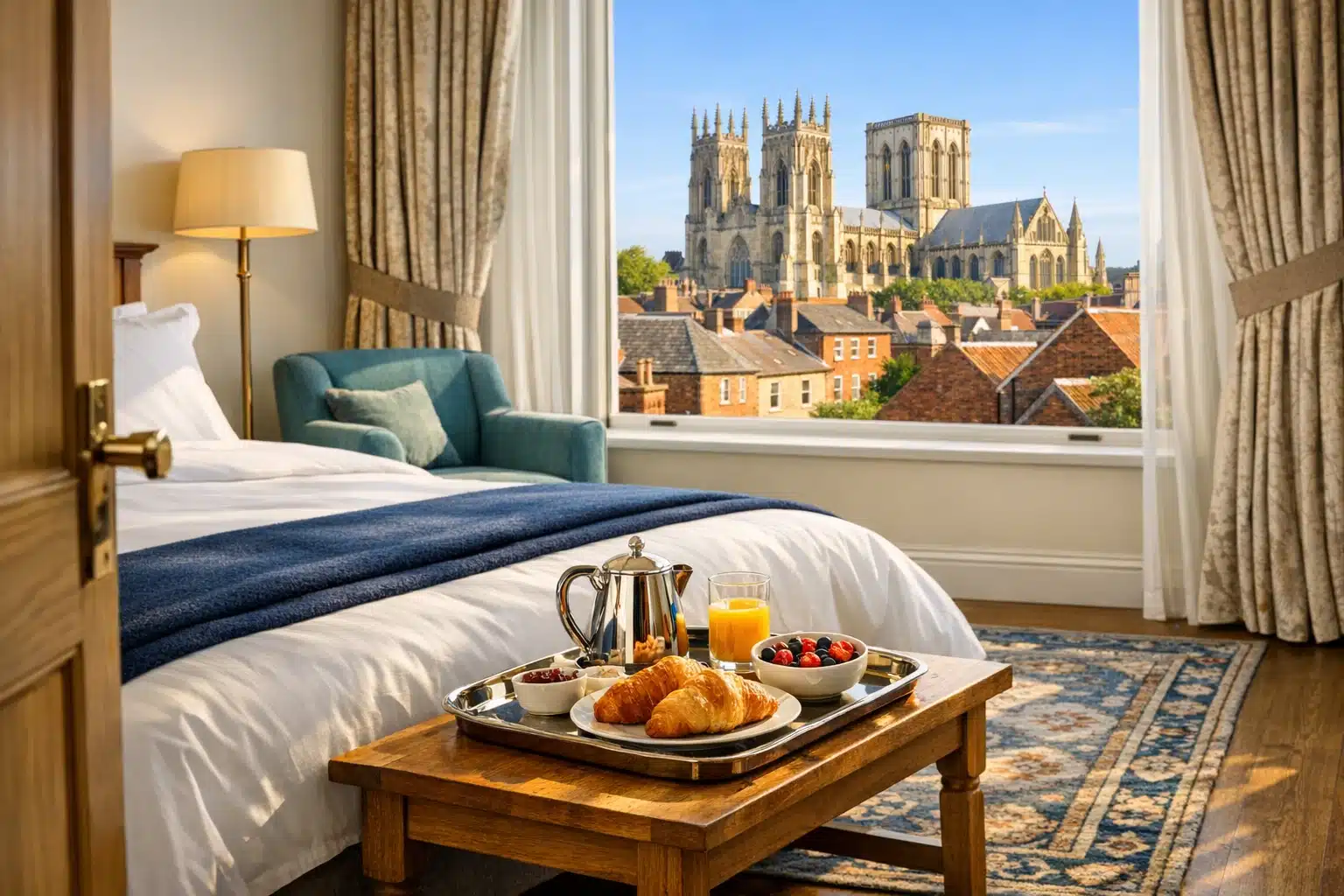
Explore 3-night York hotel stay trends with insights on accommodations, local attractions, comfort features, and travel experiences.
That sentence captures the practical way many visitors plan the city: they do not treat the hotel and the attractions as separate decisions. A room near the walls or close to the station can shape which sites feel easiest to fit into the day. York’s compact core helps, but timed-entry attractions still require strategy. JORVIK, for example, often benefits from advance booking, while the Minster deserves enough time to avoid turning a great building into a rushed photo stop.
What makes York especially effective for a short break is the way major attractions sit beside ordinary pleasures. A walk beside the River Ouse, a pause in a quiet courtyard, or an evening stroll under warm streetlights can feel just as memorable as a museum visit. History in York is not locked behind ticket desks alone; it spills into the streets. That is why travelers often leave feeling they have visited a place with depth rather than simply completed a sightseeing list.
Hotel Comfort and the Feel of a Short Getaway
Comfort matters more on a three-night city break than people sometimes expect. On a longer holiday, a mediocre room can be tolerated because there is time to recover elsewhere. On a short stay, the hotel becomes part of the rhythm of the entire trip. It is where mornings begin, where shopping bags collect on the chair, where tired feet finally stop arguing, and where the city’s noise either fades into the background or follows guests through the walls. In York, where many properties occupy historic buildings, comfort can vary in interesting ways. Character may come with sloped floors, narrow staircases, or compact bathrooms, while newer hotels may sacrifice charm but gain in lift access, sound insulation, and more consistent room sizes.
Sleep quality is often the make-or-break factor. Travelers walking several miles a day across cobbled streets quickly notice the value of a supportive mattress, decent pillows, and blackout curtains. Noise control is equally important. A hotel in the historic center may place visitors close to the Minster, pubs, and riverfront restaurants, but that centrality can bring late-night sound, especially on weekends. By contrast, a hotel ten or fifteen minutes from the busiest streets may feel calmer and offer slightly larger rooms for the same price. The best choice depends on whether the traveler prioritizes atmosphere at the doorstep or a quieter base.
Small comfort features frequently have outsized impact:
• breakfast served early enough for full sightseeing days
• dependable hot water after long walks
• a chair or small desk for planning the next day
• enough storage to keep a compact room tidy
• helpful staff who know local routes, taxi options, and restaurant habits
• luggage storage for train travelers with awkward arrival times
For couples, comfort may mean a room with more visual style, a view of old rooftops, or a hotel bar suitable for an unhurried final drink. For solo travelers, it may mean secure access, friendly reception staff, and a location that feels easy to navigate after dark. Families often value flexible bedding, breakfast simplicity, and proximity to attractions that reduce the need for constant transport decisions. In all cases, comfort is not only physical. It is also about ease. A short getaway works best when the hotel reduces friction rather than adding it.
There is a particular pleasure in returning to a warm room after York in wet weather, hanging a coat to dry, and hearing the city continue outside while you briefly step out of it. That quiet interval between sightseeing and dinner often becomes the emotional hinge of the day. Good hotels understand that they are not merely selling square footage. They are helping create a pause, and on a three-night escape, that pause can be just as important as the landmarks themselves.
Conclusion: Building a Rewarding York Escape in Three Nights
For travelers considering a short city break, York offers a rare balance of practicality and atmosphere. It is compact enough to navigate without feeling trivial, historic enough to stay interesting across multiple days, and varied enough to suit different budgets and travel styles. A well-chosen 3-night hotel stay can provide the right structure for that experience: enough time to settle in, enough daylight for major sights, and enough evening hours to enjoy the city at a more relaxed pace. That combination is why York continues to appeal to couples, solo travelers, friends on a weekend trip, and families looking for a manageable cultural escape.
The smartest approach is to book with intention rather than simply chasing the lowest visible rate. Compare what is included, especially breakfast, parking, room size, cancellation terms, and location relative to the attractions you care about most. A traveler focused on York Minster, the Shambles, and evening dining may prefer a central hotel and accept a smaller room. Someone who values silence, easier parking, or a slightly lower nightly rate might choose a property just outside the busiest streets. Neither option is wrong. The right one depends on how you want the trip to feel from morning to night.
A strong 3-night York plan often looks like this:
• arrival day for check-in, orientation, and a gentle first walk
• one full day for headline sights and ticketed attractions
• one full day for walls, museums, shopping, or slower discoveries
• departure day used for breakfast, a final wander, and luggage storage if needed
That pattern leaves space for spontaneity, which is one of York’s real strengths. You may start with a list of monuments and end up remembering a quiet lane, a second-hand bookshop, or the color of the stone near sunset. The city supports both the organized traveler and the wanderer. Its scale invites walking, and its layers of history reward curiosity at almost every turn.
If you are the kind of traveler who wants a destination with character but not chaos, York makes excellent sense for three nights. Choose a hotel that matches your pace, allow the famous attractions enough time, and leave room for the city to surprise you between the major stops. That is often when a short getaway stops feeling short and starts feeling complete.