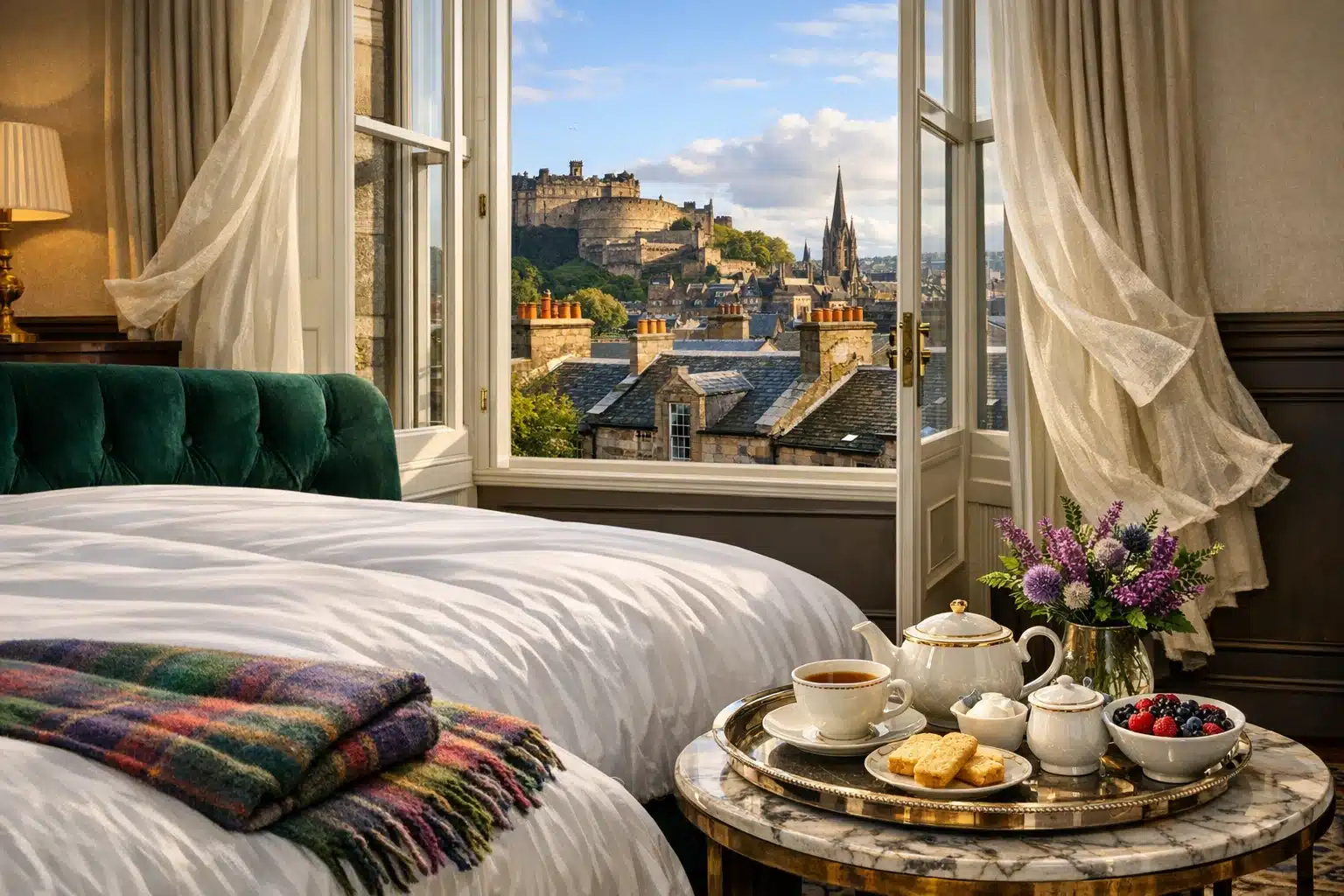
 Artificially generated image
 3-Night All-Inclusive Edinburgh City Break: What Makes This Worth It?
Edinburgh suits a short break unusually well because the city combines walkable neighborhoods, dramatic scenery, and centuries of history within a compact area that can be explored over three nights without turning the trip into a sprint. For many travelers, that makes package deals especially appealing: they reduce planning friction while still leaving room for spontaneity. The real question is not whether a bundle looks convenient, but whether it adds genuine value. This article examines inclusions, historic highlights, and hotel priorities shaping brief stays in the Scottish capital.
Outline
- How a 3-night Edinburgh break differs from a longer holiday and why package structure matters.
- What travelers usually get in bundled city break offers, from rooms and breakfast to tickets and transport.
- Which historic sites and local experiences give the strongest sense of Edinburgh in a short time.
- How hotel expectations are changing, including location, sleep quality, flexibility, and design.
- Who benefits most from this kind of trip and how to judge whether a package is worth booking.
Understanding the Appeal of a 3-Night Edinburgh Break
A three-night stay occupies a sweet spot in city travel. It is longer than a rushed overnight visit, yet short enough to feel manageable for busy professionals, couples seeking a change of scene, families fitting travel around school terms, or friends building a long weekend around food, culture, and conversation. Edinburgh benefits from this format because much of what visitors want to see sits within a concentrated area. The Old Town, the New Town, Princes Street Gardens, Calton Hill, and many museums can be combined without spending half the trip in transit. That practical advantage matters more than glossy brochure language.
When a package uses the phrase all-inclusive, travelers should read it carefully. In a city setting, it rarely means unlimited meals and resort-style drinks throughout the day. More often, it refers to a bundle that may include accommodation, breakfast, transport, and selected extras such as attraction tickets or dinner on one evening. In other words, the value comes from simplification rather than endless inclusions. That can still be worthwhile, especially in a place like Edinburgh where planning individual tickets during peak periods can become time-consuming.
Another reason this format works is seasonal rhythm. Edinburgh changes character dramatically across the year. Summer brings long daylight hours, outdoor views, and major festivals, but also heavier crowds and higher hotel rates. Winter offers atmospheric streets, festive markets, and the famous Hogmanay period, though weather can be sharp and daylight shorter. Spring and autumn often strike a pleasing middle ground, with fewer queues and a steadier pace. A package can help travelers manage these shifts because pricing, breakfast, and location become easier to compare when several trip elements are bundled together.
There is also a psychological benefit. A short city break should feel light on administration. If the hotel is central, breakfast is handled, and at least one major attraction is already arranged, travelers can spend more energy on the enjoyable parts of the trip: choosing whether to walk the Royal Mile at dusk, pause in a quiet close, or climb Arthur’s Seat for a wind-bright view over the city. A good Edinburgh package does not remove choice; it clears the clutter that gets in the way of choice.
What Is Typically Included in Edinburgh City Break Packages
The foundation of most Edinburgh city break packages is accommodation for two or three nights, usually in a centrally located hotel or a well-connected district such as Haymarket, the New Town, Leith, or the area around the Royal Mile. The strongest deals balance access and comfort. A room in the historic core may place visitors steps from major sights, but it can come with smaller room sizes, more street noise, or older building layouts. Hotels slightly outside the busiest zones often offer better value, larger rooms, and easier taxi or tram access while still keeping the center close.
Breakfast is one of the most common inclusions, and for a short stay it matters more than it might on a longer holiday. A reliable breakfast removes one daily decision, helps travelers start sightseeing earlier, and can offset the cost of eating in a city center where prices add up quickly. Some packages add a dinner credit, afternoon tea, or a welcome drink. These extras are not always decisive on their own, but they can tip a package from ordinary to convenient.
Transport varies widely. Depending on the departure point and the seller, a bundled trip may include:
- return flights or rail tickets
- checked baggage or only cabin luggage
- airport transfers or tram access guidance
- flexible booking terms or fixed, non-refundable conditions
- attraction tickets or hop-on hop-off bus access
This is where comparison becomes essential. Two offers can carry similar headline prices while delivering very different actual value. One may include breakfast, rail travel, and castle entry. Another may only cover the room and transport, leaving travelers to pay separately for meals and sightseeing. Reading the details is not glamorous, but it is often the difference between a smooth weekend and a string of small surprise costs.
Some packages are built around themes. Cultural breaks may include gallery or museum passes, theatre options, or whisky tasting experiences. Romantic escapes sometimes add late checkout, prosecco, or spa access. Family-oriented offers may lean toward larger rooms, breakfast, and attractions that work for mixed age groups. The practical questions to ask are simple: Is the hotel where you want to be? Are the included extras things you would genuinely buy anyway? Does the bundle save time as well as money? If the answer is yes on all three, the package starts to make real sense.
Historic Attractions and Experiences Travelers Explore
Edinburgh has a way of making history feel physically present. It rises from volcanic rock, layers medieval streets over steep closes, and shifts almost abruptly into Georgian order in the New Town. For a short visitor, that means the city’s historic appeal is not limited to a few isolated monuments; it is stitched into the walk between them. The Old and New Towns together form a UNESCO World Heritage Site, and that designation captures what many travelers notice immediately: the setting itself is part of the attraction.
Edinburgh Castle is usually near the top of the list, and not simply because it is famous. Its position atop Castle Rock gives it visual authority over the skyline, while the site combines military history, royal symbolism, and broad city views in one stop. It can be busy, especially in summer, so timed entry works well for short breaks. From there, the Royal Mile creates a natural route downhill through the Old Town, linking major landmarks while also offering the smaller textures that make the city memorable: worn stone steps, hidden courtyards, street performers, and church spires appearing around corners.
Travelers often combine a few headline sights with one or two immersive experiences:
- St Giles’ Cathedral for architecture and civic history
- the Palace of Holyroodhouse at the foot of the Royal Mile
- The Real Mary King’s Close for underground urban history
- the National Museum of Scotland for broad historical context and free entry
- Calton Hill or Arthur’s Seat for views that explain the city’s geography
Each option offers a different kind of historical encounter. The castle is ceremonial and strategic. Holyroodhouse introduces royal narrative. Mary King’s Close brings visitors close to the texture of earlier urban life. The museum is especially useful for travelers who want context without committing to a fully guided day. In a short break, that flexibility is valuable.
Guided walking tours can also be worth the time, particularly for first-time visitors. A good guide turns streets into stories, connecting politics, religion, trade, literature, and daily life in a way signage alone cannot. Self-guided wandering has its own charm, of course. There is pleasure in simply following the curve of the Royal Mile and seeing where a close leads. The strongest short itineraries usually mix both approaches: one structured visit for depth, one museum for overview, and plenty of unhurried walking in between. Edinburgh rewards that rhythm beautifully.
Hotel Comfort and the New Priorities of Short-Stay Travel
Hotel expectations on short city breaks have changed noticeably. Travelers are often willing to accept a smaller room if the sleep quality is excellent, the shower is powerful, the Wi-Fi is reliable, and the location saves time every day. In a three-night trip, convenience has outsized value. Ten extra minutes of walking to breakfast or twenty awkward minutes hauling luggage over cobbles can feel minor on paper and irritating in practice. That is why comfort in Edinburgh is no longer judged only by star rating. It is measured through the full experience of arrival, rest, and movement through the city.
Explore Edinburgh city break trends with insights on hotel stays, local attractions, comfort features, and short getaway experiences.
That phrase captures the current shape of demand rather neatly. Many visitors now want a hotel that acts as a launch point rather than a destination in itself. They look for fast check-in, useful local advice, sound insulation, quality bedding, and breakfast that starts early enough to support a full sightseeing day. Boutique hotels remain popular because they often reflect the city’s character, but aparthotels and serviced apartments have also gained ground, especially among families, remote workers extending a weekend, and travelers who prefer extra space over decorative flair.
Several features stand out in current booking behavior:
- central or tram-friendly locations that reduce transfer stress
- flexible cancellation policies for short, easily disrupted trips
- good coffee, practical work surfaces, and strong connectivity
- bathrooms with dependable heating and water pressure
- late checkout or luggage storage for final-day flexibility
Edinburgh’s building stock also influences expectations. Many charming hotels occupy older properties with character, but that can mean uneven room layouts, limited lift access, or varying sound levels. Modern travelers increasingly read reviews with this in mind. They are not only asking whether a hotel is pretty. They want to know whether it is quiet, functional, and fair for the price. During festival season, when rates can climb sharply, these questions become even more important.
There is also a subtle trend toward meaningful comfort rather than decorative luxury. A traveler on a short city escape may care less about a formal lounge and more about blackout curtains, easy luggage storage, or a staff member who can suggest a good supper near the hotel after an evening walk. In that sense, the best hotel choice for Edinburgh is not necessarily the grandest one. It is the one that removes friction and helps the city feel open, navigable, and enjoyable from the moment the bags hit the floor.
Final Thoughts for Travelers Considering a 3-Night Edinburgh Package
A 3-night Edinburgh city break tends to be worth it when the package supports the natural rhythm of the destination rather than forcing travelers into an overfilled schedule. The city is ideal for people who enjoy places with visible history, strong atmosphere, and enough cultural depth to fill a weekend without constant transport. Couples often appreciate the balance of scenic walks, historic interiors, and restaurants tucked into old streets. Solo travelers benefit from how easy the center is to navigate on foot. Friends can split time between heritage, pubs, museums, and panoramic viewpoints without needing military-level planning.
The smartest approach is to judge value through three filters. First, consider location. If the hotel is central or very well connected, the break becomes easier from the first hour. Second, look at what is actually included. Breakfast, attraction entry, rail travel, or a flexible booking policy can be more useful than flashy extras that sound generous but add little. Third, think about the kind of trip you want. A history-focused stay may benefit from castle entry and a walking tour. A more relaxed getaway may be better served by a comfortable hotel, late checkout, and time left open for wandering.
Travelers should also match expectations to season. August can be exhilarating because the city bursts with performances and energy, yet it is also busier and usually more expensive. Winter brings mood, lights, and a distinct festive charm, but weather can reshape daily plans. Shoulder seasons often deliver the best balance of availability, price, and breathing room. There is no universally perfect time; there is only the right fit for the style of break someone wants.
Ultimately, Edinburgh rewards curiosity more than speed. A good package gives structure without making the experience feel pre-written. It should help with the practical pieces, free up time, and leave enough room for the moments people remember later: a view from the castle wall, the sound of footsteps in a narrow close, a warm meal after a windy climb, or a final morning looking over the city before heading home. For travelers who want substance in a short span, that is exactly what makes the trip worth considering.